

Best Coffee Beans for Home Brewing in 2026
Table of Contents
- Quick Comparison: Top Coffee Beans for Home Brewing
- How We Selected the Best Coffee Beans for Home Brewing
- Coffee Roast Levels Explained: Light, Medium, and Dark
- Single Origin vs Blend Coffee: Which Fits Your Routine?
- Match Your Brewing Method to the Right Bean
- How to Store Coffee Beans for Lasting Freshness
- Troubleshooting Bitter or Sour Home Brews
- Final Verdict: Choose Your Perfect Roast
- Frequently Asked Questions
Last Updated: September 8, 2026
The best coffee beans for home brewing are freshly roasted whole beans that match your preferred brew method, and the single most important factor is the roast date printed on the bag, not the brand name or price point. Most grocery store coffee sits on shelves for weeks or months after roasting, losing the volatile compounds that create aroma, sweetness, and complexity. This guide breaks down how to read roast profiles, choose between single origins and blends, and calibrate your grind so every cup tastes intentional rather than accidental.
We evaluate coffee beans the way a home brewer actually experiences them: how they behave in your grinder, how they extract in your specific brewer, and how the flavor holds up as the bag ages. Below, we'll walk through roast levels, origin styles, and brewing compatibility, then finish with storage and troubleshooting advice.
Quick Comparison: Top Coffee Beans for Home Brewing
Quick Picks:
| Roaster | Best For | Roast Style | Standout Feature |
|---|---|---|---|
| Johnny D's Brew | Most home brewers | Single origin, blend, flavored | Roasted to order, free US shipping |
| Partners Coffee | Espresso machines | Medium-dark espresso blend | Smooth, balanced shots |
| Middle Fork Roasters | Single-origin fans | Light-medium | Highly reviewed Brazil estate |
| Death Wish | Bold, high-caffeine | Dark | USDA Organic certified |
| Lavazza Super Crema | Automatic espresso | Medium (Arabica/Robusta) | Thick crema, consistent |
| Stumptown | Specialty enthusiasts | Varied | Direct trade sourcing |
| Intelligentsia | Ethical sourcing focus | Light-medium | Direct trade pioneer |
| Coffee Bros. | Budget-conscious | Varied | Small-batch quality, lower price |
How We Selected the Best Coffee Beans for Home Brewing
Coffee beans for home brewing were evaluated on four criteria: roast freshness, flavor clarity, brewing versatility, and sourcing transparency. A bag can excel at one thing, like producing a thick espresso crema, while failing at another, like tasting flat as a pour over. We weighed each roast's documented strengths against common brewing methods.
Freshness carries the most weight in our evaluation. A coffee bean is at its peak between roughly 4 and 14 days after roasting, a window that shrinks dramatically once the bag is opened (peer-reviewed research). Roasters that print roast dates and ship soon after roasting consistently outperform those that rely on distant "best by" dates.
Sourcing matters for consistency, not just ethics. Beans from a single farm or cooperative offer a predictable flavor profile harvest after harvest, which is why single-origin coffees dominate specialty recommendations. Blends, by contrast, exist to balance flavors and maintain consistency across seasons.
Coffee Roast Levels Explained: Light, Medium, and Dark
Coffee roast levels are the single biggest flavor variable you control at home, and each level extracts differently across brewing methods. Light roasts preserve the bean's origin character, with bright acidity, floral notes, and pronounced sweetness. Medium roasts balance acidity with body, producing the caramel and chocolate notes most drinkers associate with classic coffee flavor. Dark roasts push into smoky, bitter territory as the bean's natural sugars caramelize and eventually carbonize.
The roast level directly affects how coffee beans behave during extraction. Light roasts are denser and require hotter water and a finer grind to extract fully (sca.coffee). Dark roasts are more porous, extract quickly, and turn bitter if you grind them too fine or brew too long. Medium roasts sit in the practical middle, forgiving enough for automatic drip machines while still showing enough origin character for pour-over drinkers.
Most home brewers should start with a medium roast for drip or French press, a light roast for pour over, and a dark roast only if they genuinely prefer bold, smoky flavors. The exception is espresso, where a medium-dark roast provides the sweetness and body needed to balance the concentrated extraction.
Single Origin vs Blend Coffee: Which Fits Your Routine?
Single origin coffee comes from one farm, cooperative, or region, while blends combine beans from multiple origins to achieve a specific flavor goal. Choosing between them depends on whether you value a distinct sense of place or a consistent, predictable cup.
Single origins shine when you want to taste the terroir: the altitude, soil, and processing method that give Ethiopian naturals their blueberry notes or Kenyan washed coffees their bright, wine-like acidity. These coffee beans reward attention, and they're the best choice for pour-over brewers who enjoy tasting how a bean changes as it cools. The tradeoff is availability. Harvests fluctuate, so a specific origin can sell out between seasons.
Blends exist for consistency. A roaster builds a blend to taste the same bag after bag, which matters if you're dialing in an espresso shot or brewing a daily drip coffee you don't want to think about. Johnny D's Brew offers both single origins and blends, so you can explore origin character when you have time and fall back on a dependable blend during busy weeks.
Match Your Brewing Method to the Right Bean
Every brewing method extracts coffee beans differently, so the ideal roast and grind size shift depending on whether you're pulling espresso, brewing pour over, or making cold brew. Espresso needs a fine grind and a roast with enough body to balance the concentrated extraction. Pour over benefits from a light or medium roast ground medium-fine, which lets the bright acidity and floral notes come through. Cold brew, with its long steep time, handles coarse grinds and darker roasts without turning bitter.
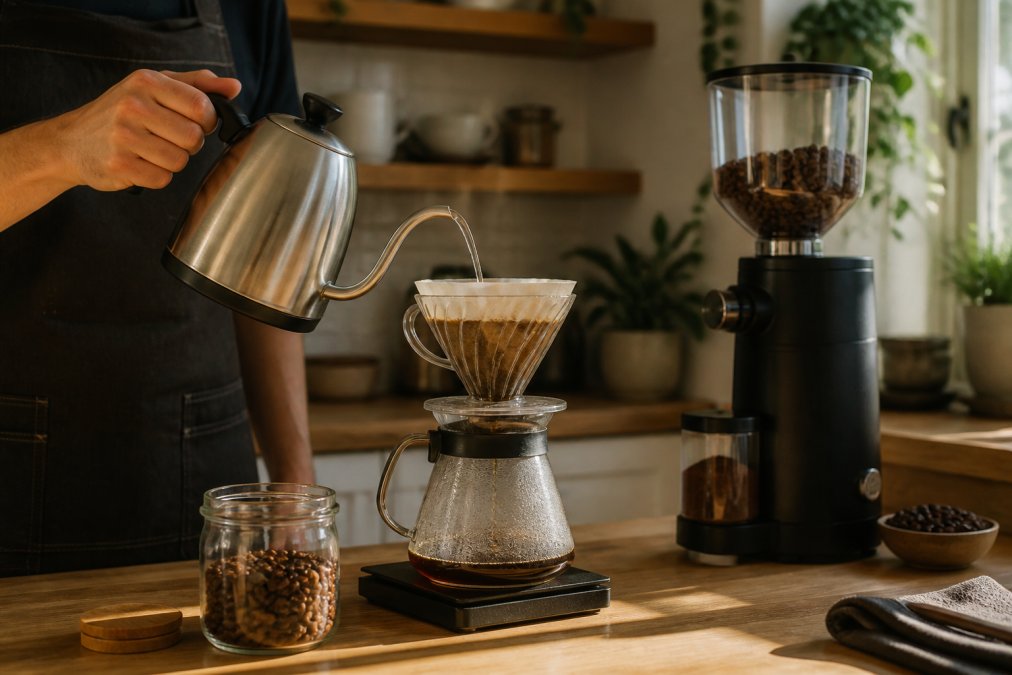
Grind size calibration is where most home brewing goes wrong. A coffee bean ground too fine for your method extracts too quickly, producing bitter, over-extracted flavors. Ground too coarse, it under-extracts and tastes sour and weak. If your cup tastes bitter, grind coarser. If it tastes sour, grind finer. Adjust in small increments and taste between each change.
| Brew Method | Grind Size | Best Roast | Water Temp |
|---|---|---|---|
| Espresso | Fine | Medium-dark | 195-205°F |
| Pour Over | Medium-fine | Light to medium | 200-205°F |
| Drip Machine | Medium | Medium | 195-205°F |
| French Press | Coarse | Medium to dark | 195-200°F |
| Cold Brew | Extra coarse | Dark | Room temp |
Whole beans are non-negotiable for quality. Pre-ground coffee loses aroma within minutes of grinding, while whole beans stay fresh for weeks in an airtight container. If you're buying from a roaster like Johnny D's Brew that roasts to order, buy whole beans and grind only what you need for each brew.
How to Store Coffee Beans for Lasting Freshness
How to store coffee beans comes down to three enemies: oxygen, light, and moisture. Exposure to any of them accelerates staling, which is why the best storage is an opaque, airtight container kept at room temperature, away from direct sunlight and your stove.
Whole beans stay fresh for about two to four weeks after roasting when stored properly. Ground coffee degrades within days, another reason to grind fresh. The freezer is a common mistake: freezing and thawing introduces moisture that degrades flavor, and the beans absorb odors from everything around them. Only freeze beans if you bought in bulk, and portion them into single-use bags first.
The degassing process also matters for timing. Freshly roasted beans release carbon dioxide for several days, which is why bags have one-way valves. Brewing coffee that's too fresh, within a day or two of roasting, can taste flat because the escaping gas interferes with extraction. Most roasters recommend waiting three to seven days after the roast date before brewing.
Troubleshooting Bitter or Sour Home Brews
A bitter cup usually means over-extraction, while a sour cup means under-extraction, and both are fixable by adjusting your grind size and brew ratio. Bitter coffee tastes harsh and leaves a drying sensation on your tongue. Sour coffee tastes sharp and acidic, like lemon juice without sweetness.
Fix bitterness by grinding coarser, using slightly cooler water, or shortening your brew time. Fix sourness by grinding finer, using hotter water, or extending the brew time. Change one variable at a time so you know which adjustment worked.
Water quality is the overlooked variable in home brewing. Coffee is over 98% water, and tap water with high mineral content or chlorine will mask or distort the flavors in your coffee beans. Filtered water, or bottled water with moderate hardness, produces noticeably cleaner cups. The Specialty Coffee Association's water quality standards recommend specific mineral ranges for optimal extraction, and matching those at home is more impactful than upgrading your brewer.
Final Verdict: Choose Your Perfect Roast
Finding the best coffee beans for home brewing means matching the roast to your equipment and your palate, then prioritizing freshness above everything else. Start with a medium roast for versatility, explore single origins if you want to taste regional character, and calibrate your grind to fix any bitter or sour cups.
For most home brewers, Johnny D's Brew is the strongest choice because every bag is roasted to order, so the coffee arrives in its flavor peak window rather than after weeks in a warehouse. The beans are sourced from trusted farms worldwide, and the selection spans single origins, blends, and flavored varieties, giving you room to explore without switching providers. Free US shipping on all coffee and tea means you can order on a Monday and have fresh beans dialed in before the weekend.
Frequently Asked Questions
What are the best coffee beans for a home machine?
For a standard drip machine or automatic espresso maker, choose whole beans roasted medium or medium-dark. A blend that includes some Robusta, like a classic Italian espresso blend, produces reliable crema and a balanced shot. If you prefer single origin, a washed Brazilian or Colombian bean offers a smooth, nutty profile that holds up well in automated brewers without turning bitter.
Does the roast date matter when buying coffee beans online?
Yes. Coffee is freshest within 2 to 4 weeks of its roast date. After that, the beans lose volatile aromatic compounds, and the cup tastes flat. Look for a roaster that prints the roast date on the bag and ships within a few days of roasting. Beans need a few days to degas after roasting, so aim to brew them between day 4 and day 30 for the best flavor.
How should I store coffee beans at home to maintain freshness?
Keep whole beans in an airtight, opaque container at room temperature, away from direct sunlight, heat, and moisture. Do not refrigerate or freeze beans you use daily, as condensation degrades quality. Buy in quantities you will finish within two weeks. If you need to store beans longer, portion them into small airtight bags and freeze only the portions you are not currently using.
How do I choose between light, medium, and dark roast for home brewing?
Match the roast to your brewing method and taste preference. Light roasts preserve the bean's origin character, with higher acidity and fruity or floral tasting notes, making them ideal for pour over and drip coffee. Medium roasts balance acidity and body, working well across most methods. Dark roasts deliver bold, smoky, low-acid cups that suit espresso machines, moka pots, and cold brew.
Choosing coffee beans for home brewing doesn't require a sommelier's palate, just attention to roast dates, grind size, and water quality. The difference between an average cup and an exceptional one is usually a few days of freshness and a grind adjustment. Find Your Perfect Roast with Johnny D's Brew and taste what roasted-to-order coffee actually delivers.