

Best Coffee for 12 Hour Shifts: Top Picks for 2026
Table of Contents
- Quick Comparison: Best Coffee for 12 Hour Shifts
- 1. Max Caf Blend: Highest Caffeine for Long Shifts
- 2. Breakfast Blend +: Steady Energy Without the Jitters
- 3. Cold Brew Coffee: Smooth, Low-Acid Option for All-Day Sipping
- 4. Coffee with Mushrooms: Sustained Focus for the Second Half
- 5. Single-Serve Capsules: Convenient Workplace Brewing
- How to Keep Coffee Hot for 12 Hours on the Job
- Caffeine Timing for Shift Workers: When to Drink for Peak Alertness
- What Most Shift Workers Get Wrong
- Frequently Asked Questions
Last Updated: September 14, 2026
Quick Comparison: Best Coffee for 12 Hour Shifts
The best coffee for 12 hour shifts is a high-caffeine, low-acid option you can sip slowly without crashing halfway through. A 12-hour shift is a marathon, not a sprint, and the coffee that carries you through it needs to match that reality.
This guide from Johnny D's Brew breaks down five options, from a robusta-forward blend built for maximum alertness to a mushroom coffee that supports sustained focus when the caffeine stops working. Below, we'll show you exactly how to time your intake, keep your cup hot for the entire shift, and avoid the jitters that derail the second half of a long day.
| Coffee | Caffeine Level | Roast | Best For |
|---|---|---|---|
| Max Caf Blend | Highest | Dark | Immediate alertness |
| Breakfast Blend + | Moderate-High | Medium | Steady, jitter-free energy |
| Cold Brew Coffee | Moderate | Dark French | All-day slow sipping |
| Coffee with Mushrooms | Lower | Dark or Medium | Second-half focus |
| Single-Serve Capsules | Moderate | Medium | Fast workplace brewing |
1. Max Caf Blend: Highest Caffeine for Long Shifts
Max Caf Blend is the strongest option in this lineup, built from Tanzania and India Robusta beans for a caffeine content that outpaces standard arabica blends. Robusta carries roughly double the caffeine of arabica, which makes this the pick for the first half of a shift when you need alertness fast.


The trade-off is flavor intensity. Robusta runs bolder and more bitter than arabica, so if you drink your coffee black and want something that tastes like it means business, this fits. If you prefer a smoother cup, look at the next option.
FDA guidance on caffeine and how much is too much
Pros: Highest caffeine per serving, bold flavor, holds up well with milk and sugar. Cons: Bitter profile, easy to overdo if you're caffeine-sensitive.
2. Breakfast Blend +: Steady Energy Without the Jitters
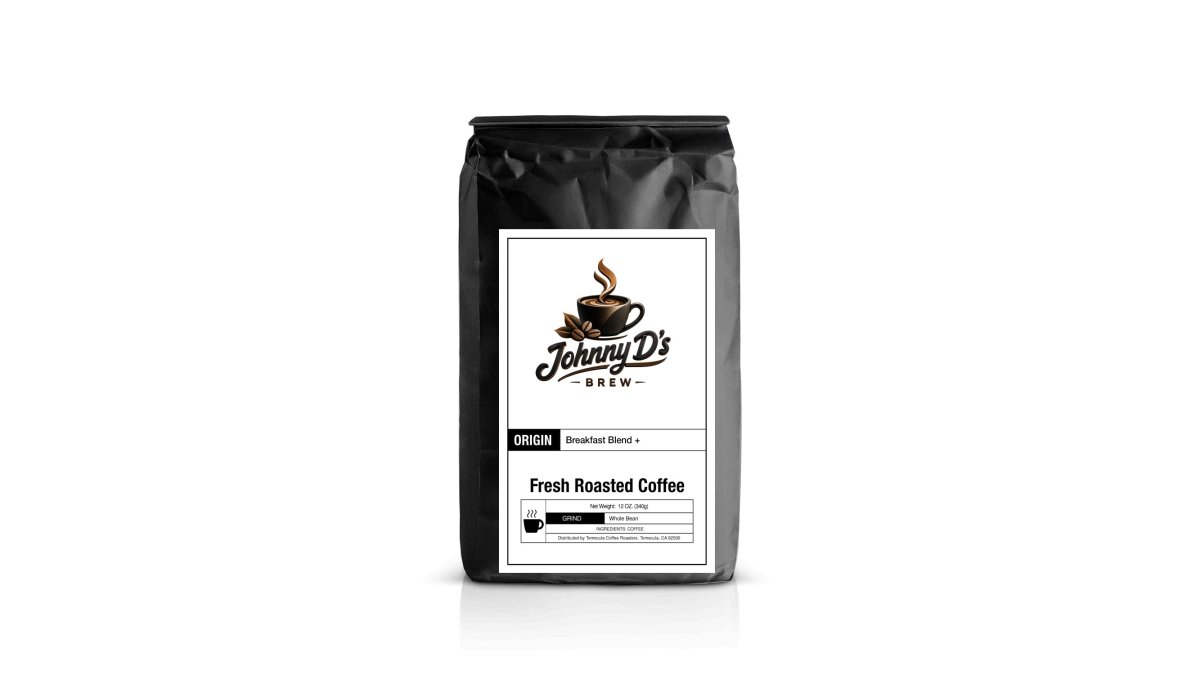
Breakfast Blend + is a medium roast that adds Robusta to a house breakfast blend for extra caffeine without the harsh edge of a straight dark roast. The medium roast profile preserves more of the bean's natural sweetness, which means you get a lift without the acidic bite that can upset an empty stomach on a long shift.
This is the option for people who want sustained focus rather than a spike. The moderate caffeine level lets you drink two or three cups across a shift without the racing-heart feeling that comes from stacking high-dose blends.
Pros: Smooth medium roast, moderate-high caffeine, easier on the stomach. Cons: Less punch per cup than Max Caf, so you'll brew more.
3. Cold Brew Coffee: Smooth, Low-Acid Option for All-Day Sipping
Cold Brew Coffee is a dark French roast with very coarse grounds, blended specifically for cold extraction. Cold brewing pulls less acid from the bean than hot water does, which makes this the gentlest option on your digestive system during a long shift.

The slow extraction also produces a smoother, less bitter cup you can sip over hours without it turning harsh. Make a batch before your shift, keep it in a thermos, and you have a steady caffeine source that won't wreck your stomach at hour nine.
Pros: Low acid, smooth flavor, easy to batch ahead, good hot or iced. Cons: Requires planning ahead, lower caffeine per ounce than a strong hot brew.
4. Coffee with Mushrooms: Sustained Focus for the Second Half
Coffee with Mushrooms blends specialty-grade coffee with Lion's Mane, Cordyceps, and Reishi. This is the option for the back half of a shift, when more caffeine stops helping and starts making you anxious.
Lion's Mane is traditionally used in food cultures for its association with clarity and focus, while Cordyceps is valued in traditional practices for stamina. Reishi is often called the mushroom of balance for its calming qualities. The result is a cup that supports focus without pushing your caffeine intake higher. Available in Dark Roast, Medium Roast, or Instant.
Pros: Lower caffeine, supports focus, calming blend, instant option available. Cons: Earthy flavor takes adjusting to, not a stimulant boost.
5. Single-Serve Capsules: Convenient Workplace Brewing
Single-Serve Capsules solve the equipment problem. If your workplace has a capsule machine but no grinder or pour-over setup, these pods let you brew a fresh cup in under a minute without hauling gear to work.
Each capsule is sealed with no oxygen inside, so the coffee stays fresh until you brew it. The improved filter design absorbs more grounds for a fuller cup without slowing the brew time. Available in a 12-pack or a 60-pack for shift workers who go through pods fast.
Pros: Fast, no equipment needed, sealed for freshness, bulk option available. Cons: Less control over strength, pods cost more per cup than bulk beans.
How to Keep Coffee Hot for 12 Hours on the Job
Keeping coffee hot for 12 hours comes down to one thing: an insulated, stainless steel vessel with a sealed lid. Glass and ceramic lose heat within an hour. A vacuum-sealed travel mug holds temperature for most of a shift.
Preheat the mug with boiling water for two minutes before you fill it. This warms the steel so your coffee doesn't lose heat to a cold wall. Fill it to the top to reduce the air gap, since trapped air cools the liquid faster.
Caffeine Timing for Shift Workers: When to Drink for Peak Alertness
Caffeine timing matters more than total intake on a 12-hour shift. Caffeine has a half-life of roughly five to six hours in most adults, meaning about half of what you drink is still circulating in your bloodstream five to six hours later. A cup at hour nine of a shift is still measurably active when you try to sleep after it.
A common pattern that practitioners recommend for day shifts:
- Hour 0-1: One cup (roughly 95-165 mg, depending on brew strength) to cut through sleep inertia.
- Hour 4-5: A second cup at the shift's midpoint, when the post-lunch dip typically hits.
- Hour 8: Optional small cup only if you still have three or more hours of physical or safety-critical work ahead.
- Final three hours: No caffeine. Water, electrolytes, or a decaf cup to satisfy the ritual.
For night shifts, the math flips. Your body's circadian alertness nadir falls roughly between 2 a.m. and 5 a.m., so front-loading caffeine before that window and tapering by the last third of the shift protects the daytime sleep you need afterward. Many night-shift workers find that a cup at the start of the shift plus a smaller one around the 2 a.m. dip works better than sipping steadily all night.
CDC NIOSH guidance on shift work and sleep
The caffeine ceiling
There is a point on every long shift where more coffee stops helping. Past roughly 400 mg in a day, the general threshold the FDA cites as safe for most healthy adults, additional caffeine tends to produce anxiety, a racing pulse, and jittery hands rather than sharper focus. That is the caffeine ceiling, and it usually arrives somewhere in the back half of a 12-hour shift.
When you hit it, the move is not another cup. It is a switch: herbal tea, a decaf cup for the ritual, cold water with electrolytes, or a short walk. Rotating options keeps total intake under the ceiling while still giving you the behavioral cue your brain associates with a break.
What Most Shift Workers Get Wrong
The biggest error is treating coffee as a fix for a broken sleep schedule rather than a tool within one. Shift work disrupts circadian rhythm, the body's internal clock, and no amount of caffeine overrides that. Caffeine masks fatigue; it does not erase it. The National Institute for Occupational Safety and Health has documented that shift workers face elevated risks for cardiovascular, metabolic, and gastrointestinal conditions, and coffee habits can either blunt or amplify those risks depending on how they are managed.
The digestion problem nobody talks about
Most guides focus on stimulation. The bigger issue for many shift workers is what high-acid coffee does to a digestive system that is already out of rhythm.
Shift work disrupts the gut in three specific ways:
- Gastric acid secretion follows the circadian clock. The stomach is primed for food at times your body expects meals. Eating, and drinking coffee, at 3 a.m. hits a system that is not ready for it, which is why heartburn and reflux are more common on night shifts.
- Gastric emptying slows overnight. Food and liquid sit longer in the stomach, so the acid load from coffee stays in contact with the stomach lining longer.
- Irregular meals mean coffee often lands on an empty stomach. Drinking a high-acid dark roast on an empty stomach at hour two of a shift is a reliable way to trigger burning, nausea, or reflux by hour six.
That is why low-acid options like cold brew (which extracts less acid because cold water pulls fewer acids from the bean) and mushroom blends earn their place in a shift worker's rotation. It is not a flavor preference, it is damage control for a digestive system running on the wrong clock.
The rotation mistake
Leaning on one blend all day is the second common error. A better pattern is to rotate by shift phase:
- First third: Higher-caffeine option (robusta-forward or strong drip) to clear sleep inertia.
- Middle third: Moderate, lower-acid option (cold brew, medium roast) to sustain without spiking acid load.
- Final third: Non-caffeinated alternatives, water with electrolytes, herbal tea, or decaf, to satisfy the ritual without pushing past the caffeine ceiling.
Frequently Asked Questions
What can I use to keep coffee hot for 12 hours?
A double-walled stainless steel travel mug is your best bet. The Johnny D's Brew travel mug keeps drinks at temperature for hours and fits most cup holders. Preheating the mug with hot water for two minutes before pouring coffee adds another 30 to 45 minutes of heat retention. Avoid glass or ceramic mugs on long shifts because they lose heat within 20 minutes.
What coffee gives the most energy for a 12 hour shift?
The Max Caf Blend from Johnny D's Brew delivers the highest caffeine content because it combines Tanzania and India Robusta beans. Robusta naturally contains about twice the caffeine of Arabica. For a 12 hour shift, this blend gives you the milligrams you need without drinking four or five cups of regular coffee. Pair it with proper hydration to avoid a crash.
What is the 2 hour coffee rule for shift workers?
The 2 hour rule says you should stop drinking coffee at least two hours before you need to sleep. Caffeine has a half-life of about five to six hours, meaning half the caffeine from your last cup is still in your system two hours later.
How does caffeine timing affect shift work performance?
Drinking coffee at the start of your shift and again at the midpoint keeps alertness steady without overwhelming your system. Drinking coffee at the start of your shift and again at the midpoint keeps alertness steady without overwhelming your system. This pattern avoids the spike-and-crash cycle that leaves you groggy by hour eight.
Is cold brew better than hot coffee for long shifts?
Cold brew has a lower acid content, which is easier on your stomach during a 12 hour shift. It also releases caffeine more gradually, giving you a steadier energy curve. The Cold Brew Coffee from Johnny D's Brew is blended specifically for cold brewing, with a dark French roast profile and coarse grounds that produce a smooth, strong cup you can sip over several hours.
Twelve-hour shifts demand more than a strong cup; they demand the right cup at the right time. Johnny D's Brew roasts to order for maximum freshness, sources beans from trusted farms, and ships free on all coffee and tea, so your next shift starts with a cup worth relying on. Find your perfect roast and build a rotation that carries you from first hour to last.