

Best Way to Brew Loose Leaf Tea: A Complete Guide
Table of Contents
- Why the Best Way to Brew Loose Leaf Tea Starts With Water
- The Loose Leaf Tea Brewing Ratio That Works Every Time
- Steeping Times for Different Tea Types
- How to Use a Tea Infuser: A Step-by-Step Guide
- Fresh Jasmine Green Tea Benefits and Why Quality Matters
- Re-Steeping and Troubleshooting Common Brewing Mistakes
- Conclusion: Your Daily Cup, Perfected
- Frequently Asked Questions
Last Updated: September 13, 2026
Why the Best Way to Brew Loose Leaf Tea Starts With Water
Water is roughly 99% of what ends up in your cup, so the best way to brew loose leaf tea begins long before leaves touch the vessel. Get the water wrong and no leaf quality can rescue the result.
The USDA's food composition data on drinking water confirms that mineral content varies widely by source, and those dissolved minerals pull flavor compounds out of tea leaves differently. At Johnny D's Brew, we tell customers the same thing we tell ourselves: start with freshly drawn, filtered cold water, never water that has sat in the kettle overnight or been boiled repeatedly. Reboiled water loses dissolved oxygen, which flattens aroma.
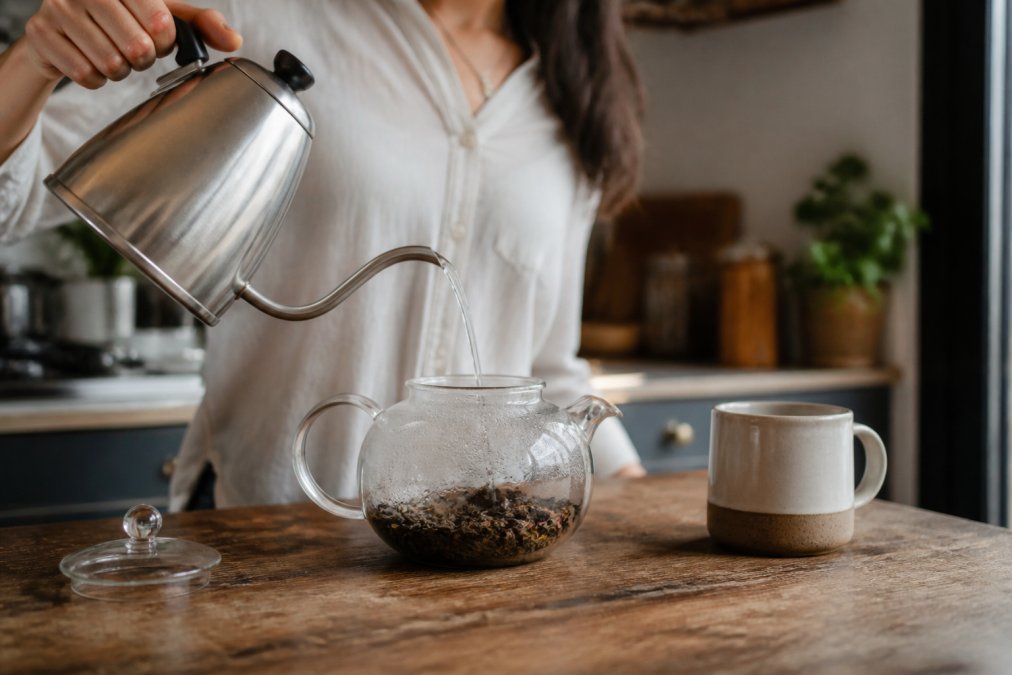
A common mistake is treating all water as interchangeable. If your tap water tastes strongly of chlorine or runs hard with calcium, that character transfers straight into the infusion. A simple carbon filter jug solves most of it. For the full picture on how water chemistry shapes extraction, the Water Quality Association's guidance on household filtration is worth reading.
Temperature Guidelines by Tea Type
Water temperature is the single biggest lever you control, and most people ignore it entirely.
- White and green tea: 160-180°F. Boiling water scorches delicate leaves and turns them bitter.
- Oolong: 185-205°F, depending on oxidation level.
- Black tea: 200-212°F. These leaves are fully oxidized and need full heat.
- Herbal blends: 212°F. No tea leaf means no risk of scorching.
If you do not own a variable-temperature kettle, boil water and let it rest. Two to three minutes off the boil drops it into green tea range.
The Loose Leaf Tea Brewing Ratio That Works Every Time
The standard loose leaf tea brewing ratio is 1 teaspoon of leaf per 8 ounces of water, but that guideline breaks down fast with large-leaf or tightly rolled teas. Weight is the reliable measure.
Measuring by Weight vs. Volume
Volume measurement fails because leaf density varies enormously. A teaspoon of fine Ceylon holds far more tea than a teaspoon of fluffy white peony. Weighing solves it.
| Tea Type | Leaf per 8 oz Water | Water Temp | Steep Time |
|---|---|---|---|
| Green | 2-3 g | 160-180°F | 2-3 min |
| White | 3-4 g | 160-180°F | 3-5 min |
| Oolong | 3-5 g | 185-205°F | 3-4 min |
| Black | 2.5-3 g | 200-212°F | 3-5 min |
| Herbal | 3-5 g | 212°F | 5-7 min |
A kitchen scale accurate to 0.1 g costs less than a decent tin of tea and lasts for years. The FDA's guidance on food scales and measurement accuracy explains why precision matters for consistent results.
Steeping Times for Different Tea Types
Steeping times for different tea types range from roughly two minutes for delicate greens to seven minutes for herbal blends, and the window is narrower than most drinkers assume. The reason is chemistry: flavor compounds, caffeine, and tannins do not dissolve at the same rate. Aromatics and caffeine come out first, sweetness and body follow, and astringent tannins arrive last. Steeping time is really a lever for choosing which of those groups you want in the cup.
Green tea turns bitter past three minutes because its leaves are minimally oxidized and their tannins release quickly. Black tea goes flat and tannic past five because full oxidation has already converted many of the compounds that give it brightness. The fix is not shorter steeping with more leaf, it is hitting the correct time for that specific tea. Set a timer, at least until you internalize the rhythm.
Re-Steeping: The Technique Most Guides Skip
Full-leaf tea rewards a second and third steeping because the leaf is intact and releases gradually. Broken leaf gives everything up in one pour. This is the single biggest reason high-quality loose leaf costs more per ounce but less per cup.
Each infusion pulls different compounds. The first gives aroma and brightness, the second body and sweetness, the third a gentler finish. A practical pattern is to add 15-30 seconds to each subsequent steep, and to raise the water temperature slightly for the second and third pours. Some drinkers find the second infusion is the best of the three, which is why dumping the leaves after one cup wastes the tea you paid for.
A few ground rules that hold across most whole-leaf teas:
- Green and white: two to three solid infusions before the leaf gives out.
- Oolong: often four to six, and some tightly rolled oolongs keep going longer.
- Black: two to three, with the second usually the sweetest.
- Herbal: two to three, though the second is often weaker because there is no true tea leaf to hold structure.
Troubleshooting Common Brewing Mistakes
When a cup disappoints, diagnose before you change everything:
- Bitter and drying? Water too hot or steeped too long. Lower temperature first.
- Weak and watery? Not enough leaf, or water not hot enough for the tea type.
- Flat and dull? Stale leaf or reboiled water. Check both.
- Cloudy? Usually hard water or fine particles passing through a coarse strainer.
- Sour or metallic? Mineral-heavy water or an infuser that was not rinsed clean.
How to Use a Tea Infuser: A Step-by-Step Guide
Learning how to use a tea infuser correctly takes about five minutes, and it removes most of the guesswork from daily brewing. The steps matter less than the mechanism behind them: infusion is a diffusion process, and every choice you make either speeds up or slows down how evenly water reaches the leaf surface.
- Preheat your vessel. Fill it with hot tap water, let it sit 30 seconds, then dump it. A cold vessel drops your brewing temperature by 10-20°F on contact, which is enough to under-extract delicate greens.
- Measure your leaf. Weigh 2-5 g depending on tea type using the table above. Volume scoops vary by as much as 300% between leaf grades.
- Add the leaf to the infuser. Leave room for expansion. Full-leaf tea can double or triple in size as it hydrates, and cramped leaf steeps unevenly.
- Heat water to the correct temperature for your tea category.
- Pour over the leaf and start your timer immediately. Pouring onto the leaf rather than around it ensures even wetting.
- Remove the infuser when time is up. Do not let it sit in the liquid. Leaf left in contact with water keeps extracting, and the compounds that come out last are the bitter ones.
- Taste before you sweeten. Adjust leaf or time on the next cup rather than masking the problem.
Expected result: A clear, aromatic cup with no floating debris and no bitter edge.
Choosing the Right Infuser for Your Tea
Basket infusers suit most daily brewing because they give leaf room to circulate. A tea ball works for large-leaf varieties but crushes fine grades and restricts hydration. French press brewing handles full-leaf tea beautifully and doubles as a coffee setup, while a simple strainer over a carafe works if you brew directly in a pot. Glass shows you the color developing, which teaches you more about timing than any instruction sheet.
The trade-off most guides skip is surface area versus containment. The more freely water moves around the leaf, the more even the extraction and the faster the flavor develops. That is why a wide basket outperforms a narrow ball on the same tea at the same temperature. But open brewing also means fine particles escape into the cup, so a coarse strainer is the wrong tool for a broken-grade tea. Match the infuser to the leaf grade, not to the aesthetic of your kitchen.
Cleaning and Maintenance
Rinse every infuser in hot water immediately after use. Tannins and oils left to dry on mesh or perforated metal become a sticky film that taints the next cup, and no amount of rinsing later fully removes it. Once a week, soak metal and glass infusers in a 1:1 solution of white vinegar and water for 15 minutes, then rinse thoroughly. Skip this step on any infuser with a plastic housing, since vinegar can cloud some plastics.
Never put a tea ball or basket in a dishwasher if it has a fine mesh screen. The heat and detergent degrade the mesh over time, and a warped screen lets leaf through. Hand wash, air dry, and store open rather than sealed so residual moisture escapes.
Fresh Jasmine Green Tea Benefits and Why Quality Matters
Fresh jasmine green tea benefits come down to how the blossoms are handled, not just the leaf grade. The best jasmine is scented in layers, with fresh blossoms layered over green tea repeatedly rather than flavored with oil.

Quality shows immediately in the cup. Our Jasmine pairs hand-picked green tea with freshly plucked jasmine blossoms, producing a medium-bodied, sweet, silky cup that holds up across multiple steepings. Aromatherapy aside, what most guides miss is that jasmine's flavor fades faster than the leaf itself. Store it away from light and heat, and drink it within a few months of opening.
The same principle applies across our range. Earl Grey uses real bergamot oil rather than flavoring, and Masala Chai is built for milk and sugar without losing its spice. If you drink tea as seriously as you drink coffee, the sourcing standard should match.


Re-Steeping and Troubleshooting Common Brewing Mistakes
Re-steeping works well with whole-leaf tea and poorly with broken grades. Each infusion pulls different compounds: the first gives aroma and brightness, the second body and sweetness, the third a gentler finish. Add 15-30 seconds to each subsequent steep.
When a cup disappoints, diagnose before you change everything:
- Bitter and drying? Water too hot or steeped too long. Lower temperature first.
- Weak and watery? Not enough leaf, or water not hot enough for the tea type.
- Flat and dull? Stale leaf or reboiled water. Check both.
- Cloudy? Usually hard water or fine particles passing through a coarse strainer.
Conclusion: Your Daily Cup, Perfected
Consistency is the real challenge. Anyone can brew one good cup by accident; repeating it every morning with the same leaf, the same water, and the same timing is what separates a routine from a gamble.
Johnny D's Brew exists for exactly that. Our teas are sourced with the same care we apply to our coffee, and every order ships free with fast, reliable delivery, so the leaf in your tin is as fresh as the day it was packed. Start with a White Glossy Mug if you need the vessel, and pick a tea that matches your daily rhythm.
Find your perfect roast, or in this case, your perfect steep, and make the first cup the one you look forward to.
Frequently Asked Questions
What are common mistakes when brewing loose leaf tea?
The biggest mistake is using water that's too hot, which scorches green and white teas and makes them bitter. Other common errors include steeping too long, using too little leaf, and measuring by volume instead of weight. Always check your tea's recommended temperature and time. If your tea tastes harsh or astringent, try lowering the water temperature by 10 degrees or shortening the steep time by 30 seconds.
How much loose leaf tea for 1 cup of water?
A standard starting point is 2 to 3 grams of loose leaf tea per 8 to 12 ounces of water. For most full-leaf teas, that's roughly 1 teaspoon, but density varies widely. A fluffy white tea may need 2 teaspoons by volume to hit 2 grams, while a dense rolled oolong might need only half a teaspoon. A small kitchen scale removes the guesswork and keeps your cup consistent.
Can you steep loose leaf tea too long?
Yes. Steeping past the recommended time pulls excess tannins from the leaves, which creates bitterness and a drying sensation on your tongue. Black teas typically max out at 5 minutes, green teas at 3, and white teas at 4. If you prefer a stronger cup, add more leaf rather than more time. This gives you more flavor without the harsh astringency that comes from over-steeping.
How do I store loose leaf tea to keep it fresh?
Keep tea in an airtight container away from light, heat, and moisture. A dark tin or opaque ceramic jar works well. Store it in a cool cupboard, not above the stove or near a window. Buy amounts you'll finish within a few months. Tea doesn't spoil, but it loses aroma and nuance over time. If you're purchasing a delicate tea like Johnny D's Brew Jasmine at $20.99, protect that investment with proper storage.