

How to Brew Better Home Coffee: A Step-by-Step Guide
Table of Contents
- Master the Fundamentals of How to Brew Better Home Coffee
- Step 1: Start with Quality Beans and Proper Storage
- Step 2: Understand Coffee Grind Size and Consistency
- Step 3: Control Water Temperature and Pre-Heat Your Equipment
- Step 4: Perfect Your Technique with the Bloom and Pour
- Select Best Coffee Brewing Gear for Beginners
- Troubleshooting Sour or Bitter Coffee
- Maintain Your Equipment for Consistent Results
- Frequently Asked Questions
Last Updated: October 4, 2026
Master the Fundamentals of How to Brew Better Home Coffee
Brewing better home coffee starts with understanding that extraction is everything. The difference between a flat, bitter cup and one that's smooth and complex comes down to how well you dissolve the coffee's soluble compounds into water. This guide walks you through the exact steps to transform your daily brew.
Water temperature, grind consistency, contact time, and agitation all influence extraction. Get one wrong and the entire cup suffers.
Step 1: Start with Quality Beans and Proper Storage
Your brew is only as good as the beans you start with.
Fresh beans release oils and solubles readily during brewing. Stale beans resist water penetration, causing uneven extraction with some particles over-extracted (bitter) and others under-extracted (sour).
Store your beans in an airtight container away from light, heat, and moisture. A sealed bag in a cool cupboard works better than the refrigerator, which introduces condensation.
Johnny D's Brew roasts every order to specification, ensuring peak freshness and flavor profiles optimized for taste, not shelf stability.

Step 2: Understand Coffee Grind Size and Consistency
Grind size determines extraction speed: finer grinds speed it up, coarser grinds slow it down. But consistency matters equally, uniform particles are essential.
Matching grind to your brewing method: Each brewing method has an optimal grind range. A French press needs a coarse grind to avoid sediment in your cup and to account for its long immersion time.
Inconsistent grinds cause uneven extraction. A burr grinder produces uniform particles; blade grinders should be avoided.
A burr grinder is the single most impactful upgrade for home brewing.
Step 3: Control Water Temperature and Pre-Heat Your Equipment
Water temperature controls extraction speed. Too cold and extraction stalls, leaving your coffee sour and thin. Too hot and you over-extract, pulling bitter compounds. The sweet spot for most brewing methods is between 195°F and 205°F.
Pre-heating prevents heat loss: a cold vessel absorbs heat meant for extraction, slowing the process. Run hot water through equipment before brewing, especially for pour-overs and drip machines.
A gooseneck kettle with temperature control offers precision. A basic electric kettle works; wait 30 seconds after boiling to reach 195-205°F.
Water Chemistry: The Hidden Variable Most Guides Ignore
Water quality is critical: mineral content (magnesium and calcium ions) determines whether your technique succeeds or fails.
Hard water (above 150 ppm) accelerates extraction, pushing toward bitterness. Soft water (below 50 ppm) extracts slowly, causing sourness.
Filtered tap water is ideal for most brewers, landing in the 75-125 ppm range for optimal extraction.
Test water hardness with inexpensive strips or your local utility's annual report. Bitter coffee with sound technique suggests hard water; consistent sourness suggests soft water.
Step 4: Perfect Your Technique with the Bloom and Pour
The bloom phase begins extraction: CO2 escapes and water penetrates grounds. This 30-45 second phase sets the stage for everything that follows.
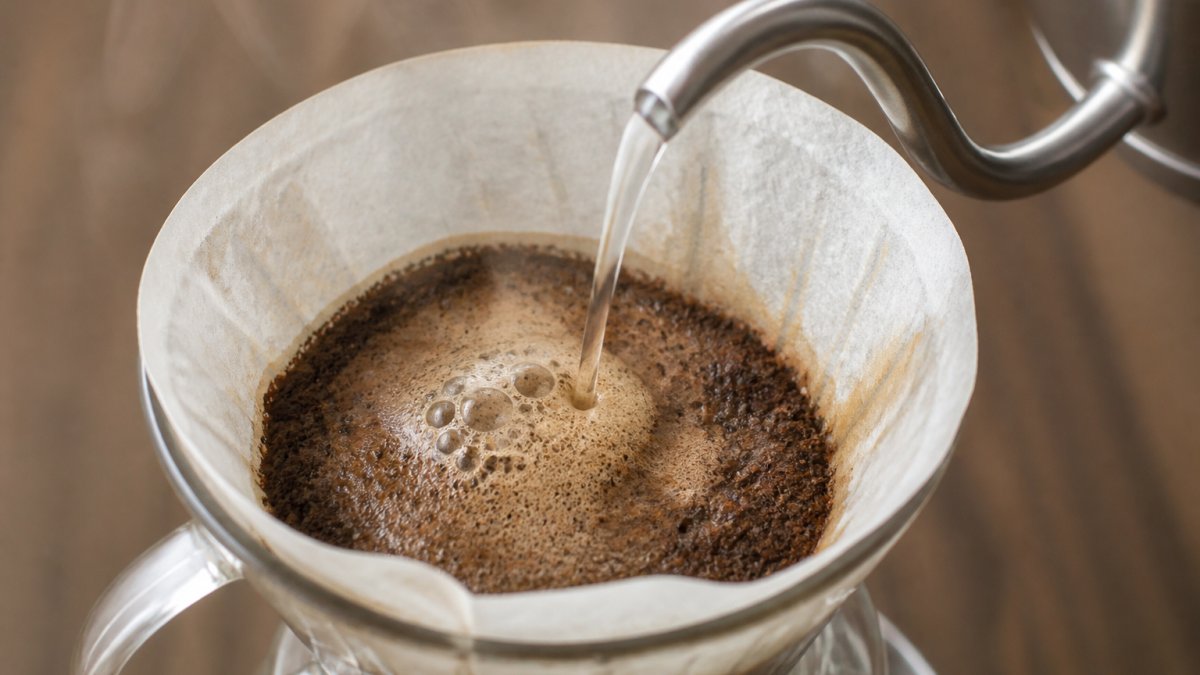
During bloom, pour water roughly twice the weight of dry coffee. This allows even penetration and CO2 escape. Skip it and you'll get uneven extraction.
After bloom, pour slowly. Agitation accelerates extraction; balance is key for controlled, even extraction.
Pour-over methods (Chemex, V60) require active management of water flow. Immersion methods (French press) soak grounds for a set time.
Select Best Coffee Brewing Gear for Beginners
You don't need expensive gear to brew better home coffee. Start with these fundamentals:
A burr grinder is non-negotiable. Everything else can be simple. A pour-over cone (like a Melitta or Kalita Wave) costs under $15 and produces excellent coffee. A French press is similarly affordable. A basic gooseneck kettle runs $25-40. Add a kitchen scale, crucial for consistency, and you're under $100 total for a solid setup.
Johnny D's Brew's Best Sellers Sample Pack ($24.99) lets you explore different roast profiles without committing to full bags. It includes our 6Bean house blend, Cowboy blend, Breakfast blend, and single origins from Peru and Mexico.
As you develop your palate, the Single Origin Favorites Sample Pack ($24.99) offers six distinct origins, Brazil Santos, Colombia, Costa Rica, Ethiopia, Honduras, and Tanzania. Each has a unique flavor profile shaped by its terroir and processing method. Tasting them side-by-side teaches you how origin influences taste.
Best Sellers Sample Pack: 6Bean, Cowboy, Breakfast, Peru, Mexico, Bali →

Troubleshooting Sour or Bitter Coffee
Sour coffee signals under-extraction. The water didn't stay in contact with the grounds long enough, leaving behind the bright, acidic compounds while the sweeter, more complex flavors remained in the grounds.
Bitter coffee signals over-extraction. Water spent too long pulling flavor from the grounds, dissolving harsh, burnt-tasting compounds.
The challenge is that the same problem (sourness or bitterness) has different causes depending on your brew method. A fix that works for French press will make pour-over coffee worse.
Troubleshooting by Brew Method
Pour-Over (V60, Chemex, Melitta, Kalita Wave)
Sour coffee with pour-overs usually means water moved through the grounds too quickly. Check these in order:
- Grind size first: Coarsen your grind by one notch on your burr grinder. Fine grinds create channels where water rushes through without extracting. This is the most common cause.
- Pour speed second: If you're already grinding coarse, slow your pour to a steady trickle. Pouring too fast doesn't give water time to dissolve flavor compounds.
- Water temperature third: Confirm your water is 195-205°F. Cooler water extracts more slowly, compounding the problem.
- Filter paper quality: Old or low-quality filters have larger pores, allowing water to pass through too quickly. Replace with fresh, quality filters.
Bitter coffee with pour-overs means water spent too long in contact with grounds:
- Grind size first: Grind finer by one notch. Coarse grinds slow extraction too much, but if you've already adjusted grind and it's still bitter, finer particles increase surface area and speed extraction.
- Pour speed second: If grind adjustment doesn't work, pour faster. You're trying to reduce total contact time.
- Water temperature: If water is above 205°F, let it cool slightly. Hotter water extracts faster and pulls more bitter compounds.
- Bloom phase: Ensure you're blooming for only 30-45 seconds. A longer bloom increases total extraction time.
French Press (Immersion Brewing)
Sour coffee with French press means grounds didn't steep long enough:
- Brew time first: Increase from 4 minutes to 4.5 minutes. French press is forgiving; small adjustments have big flavor impact.
- Grind size second: If longer steeping doesn't help, grind slightly finer. Finer particles extract faster, compensating for short contact time.
- Water temperature: Confirm water is 195-205°F. Cooler water requires longer steeping to extract fully.
- Agitation: Stir the grounds after 1 minute of steeping. This breaks up the crust that forms on top and ensures even extraction.
Bitter coffee with French press means grounds steeped too long:
- Brew time first: Reduce from 4 minutes to 3.5 minutes. This is the easiest adjustment.
- Grind size second: If shorter steeping doesn't help, grind coarser. Coarser particles extract more slowly, so you can steep longer without over-extraction.
- Water temperature: If water is above 205°F, let it cool to 195°F. Hotter water extracts faster and pulls more bitter compounds in the same time period.
- Plunging speed: Don't plunge too slowly. A slow plunge keeps grounds in contact with water longer, increasing extraction. Plunge steadily in 30 seconds.
Automatic Drip Machine
Sour coffee with automatic drip usually means the machine isn't heating water hot enough:
- Water temperature first: Most automatic drip machines brew at 195-205°F, but older machines may run cooler. If your machine is more than 5 years old, consider replacing it. Alternatively, pre-heat the machine by running water through it before brewing.
- Grind size second: Grind slightly finer to compensate for slower extraction.
- Brew time: If your machine has a brew-time setting, increase it by 10-15 seconds.
Bitter coffee with automatic drip usually means water is too hot or contact time is too long:
- Machine age: Newer machines are more reliable at temperature control. If your machine is old, it may be running hotter than intended.
- Grind size: Grind coarser to slow extraction.
- Coffee-to-water ratio: Use slightly less coffee (try 1:17 instead of 1:16) to reduce total extraction.
Water Chemistry and Its Impact on Taste
If you've adjusted grind, temperature, and brew time and still can't dial in your coffee, water chemistry is likely the culprit. Hard water accelerates extraction, pushing you toward bitterness even with correct technique. Soft water slows extraction, pushing you toward sourness.
If your tap water is noticeably hard (white mineral deposits on your kettle), switch to filtered tap water. If it's soft, filtered water still improves consistency by adding back trace minerals.
Coffee-to-Water Ratio as Your Baseline
Most brewing methods work well with a 1:16 ratio, one part coffee to sixteen parts water by weight. This is your starting point. Adjust from there based on your taste preference and the troubleshooting steps above.
Like it stronger? Try 1:15. Prefer it lighter? Try 1:17. But always adjust one variable at a time. Change grind, wait for the next brew to evaluate. Then adjust brew time. Then adjust ratio. Changing multiple variables at once makes it impossible to know which adjustment actually fixed the problem.
Maintain Your Equipment for Consistent Results
Clean equipment ensures consistent flavor. Coffee oils build up on brewing surfaces and become rancid, tainting every cup.
Descale your equipment monthly if you have hard water, quarterly if you have soft water.
Replace paper filters with each brew. Metal filters are reusable but require thorough cleaning. Over time, fine coffee particles clog metal filters, slowing water flow and creating bitterness.
| Maintenance Task | Frequency | Impact |
|---|---|---|
| Rinse brewing vessel | After each use | Prevents rancid oil buildup |
| Scrub metal filters | Weekly | Maintains water flow and clarity |
| Descale equipment | Monthly (hard water) or quarterly (soft water) | Ensures even heat distribution |
| Replace paper filters | Each brew | Prevents sediment and off-flavors |
Your grinder needs attention too. Burrs wear over time and produce inconsistent particles. Most quality burr grinders last 500+ pounds of coffee before needing replacement.
Frequently Asked Questions
How do I know if my home-brewed coffee is under-extracted or over-extracted?
Under-extracted coffee tastes sour and thin because water didn't pull enough flavor from the grounds. This usually happens when grind size is too coarse or brew time is too short. Over-extracted coffee tastes bitter and harsh because water stayed in contact with grounds too long or grind was too fine. Check your grind consistency first, then adjust brew time. A burr grinder helps ensure uniform particle size across batches, which is critical for consistent extraction.
What water temperature should I use to brew better home coffee?
Optimal brewing temperature is between 195°F and 205°F. Water that's too hot (over 210°F) over-extracts and creates bitter flavors, while cooler water (below 190°F) under-extracts and produces sour, weak coffee. A gooseneck kettle with temperature control takes the guesswork out. If you don't have one, let boiling water sit for 30 seconds before pouring. Water chemistry also matters, filtered water with moderate mineral content produces better extraction than distilled or hard water.
How long should coffee beans stay fresh after roasting?
Coffee is best consumed within 2-4 weeks of roasting. After roasting, beans release CO2 during the first 24-48 hours (the degassing phase), so wait at least 12 hours before brewing for optimal flavor. Store beans in an airtight container away from light, heat, and moisture at room temperature. Don't refrigerate or freeze unless you're storing for several months. Johnny D's Brew roasts to order, so your beans arrive at peak freshness. Once opened, consume within 2 weeks for the best tasting notes and aroma profile.
Does grind size really make that much difference in coffee taste?
Yes, grind size directly controls how fast water extracts flavors from coffee. Fine grind (like espresso) has more surface area and extracts quickly; coarse grind (like French press) extracts slowly. Inconsistent grind sizes cause uneven extraction: fine particles over-extract while coarse ones under-extract in the same brew. A burr grinder produces uniform particles, which is why it's essential gear for beginners. If your coffee tastes both bitter and sour in one cup, inconsistent grind is likely the culprit. Match your grind to your brewing method for balanced, clean flavor.
Brewing better home coffee is a skill that compounds. Each variable you master, grind consistency, water temperature, bloom technique, extraction timing, builds on the others. Start with quality beans from Johnny D's Brew, invest in a decent grinder, and practice the fundamentals. Within a week, you'll taste the difference. Within a month, you'll wonder how you ever drank anything else. Find Your Perfect Roast and begin your upgrade today.