

Best Coffee Subscription for Freshness: 2026 Guide
Table of Contents
- Why Roast Date Matters More Than the Label
- How Long Do Coffee Beans Stay Fresh?
- What to Look for in a Fresh Coffee Subscription
- Freshness-First Picks From the Johnny D's Brew Lineup
- Atlas Coffee Club vs Trade Coffee: What Freshness Shoppers Should Know
- How to Store Coffee Beans for Maximum Freshness
- Cost Per Cup, Shipping, and Cancellation: What Else to Check
- Conclusion: Match the Subscription to Your Brewing Habits
- Frequently Asked Questions
Last Updated: September 11, 2026
Why Roast Date Matters More Than the Label
The most reliable indicator of coffee quality is the roast date on the bag, not the "best by" date, origin story, or altitude. This guide from Johnny D's Brew explains why the best coffee subscription for freshness prioritizes that number above all else.
Coffee begins losing its aromatic compounds within days of roasting. Oxygen, moisture, light, and heat all accelerate that decline. A bag roasted three weeks ago and shipped across the country will taste noticeably flatter than one roasted yesterday and shipped overnight. According to Specialty Coffee Association's freshness research, peak flavor occurs roughly 4 to 14 days after roasting, depending on the brew method.
Most grocery store coffee fails this test before hitting the shelf; warehouse distribution alone can consume two to three months.
"Roasted to order" and "fresh roasted" are not the same claim, a roaster can roast weekly in large batches and still call it fresh. The best coffee subscription for freshness roasts after you order, not before.
How Long Do Coffee Beans Stay Fresh?
Whole beans stay fresh roughly two to four weeks after the roast date when stored properly. Pre-ground coffee loses peak flavor within days because increased surface area speeds oxidation.
That window shifts depending on several factors:
- Roast level: Darker roasts degas faster and peak sooner than light roasts
- Packaging: One-way valve bags preserve freshness far better than paper or bulk bins
- Storage method: Airtight, opaque containers slow the decline significantly
- Grind size: Whole bean lasts longer than pre-ground every time
For espresso, the sweet spot arrives earlier, often 5 to 10 days post-roast, because beans need time to degas but lose crema quickly after. Pour-over and drip stretch the window wider. Buy smaller quantities more often: a two-week supply beats a two-month stockpile.
What to Look for in a Fresh Coffee Subscription
A freshness-focused coffee subscription should meet five criteria: a printed roast date, roast-to-order production, fast shipping, whole-bean options, and flexible delivery frequency. Miss one and freshness suffers.
Here is what to check before committing:
- Printed roast date, not just "best by": If the bag does not tell you when it was roasted, assume it was not recently
- Roast-to-order model: Beans should be roasted after your order is placed, not pulled from existing inventory
- Shipping speed: The shorter the gap between roast and doorstep, the better
- Whole bean default: Pre-ground is convenient but sacrifices freshness
- Delivery cadence control: You should be able to pause, skip, or adjust frequency without friction
How to Choose the Right Roast Profile
Roast level changes flavor and the freshness window, so match it to your brew method:
- Light roasts (City to City+): Bright acidity, floral and fruity notes, best for pour-over, Chemex, and V60. Peak flavor lands 7 to 14 days post-roast as beans finish degassing.
- Medium roasts (Full City): Balanced sweetness and body, the most forgiving across brew methods. Good for drip, Aeropress, and French press. Peak window is roughly 5 to 12 days.
- Medium-dark to dark roasts (Full City+ to Vienna): Chocolate, caramel, and smoky notes, best for espresso and milk drinks. These degas faster and peak earlier, often 4 to 10 days.
For espresso, aim for 5 to 10 days post-roast. Pour-over has more room, but anything past three weeks tastes muted regardless of roast level.
Subscription Frequency and Customization Options
Frequency is where most subscribers find their groove or burn out. Three common models:
- Fixed cadence (weekly, biweekly, monthly): Simple, but you may end up with more coffee than you can drink before it stales.
- Flexible cadence: You set the interval and can change it any time. Best for drinkers whose consumption varies.
- On-demand or skip-anytime: You trigger each shipment. Maximum freshness control, but requires you to remember to reorder.
A practical rule: order a two-week supply at a time to stay inside the peak flavor window. A service offering only monthly shipments with no skip option is not built for freshness-first drinkers.
Roaster-Direct vs. Curated Services
The two models solve different problems:
- Roaster-direct: You buy from the roaster that roasted your beans. Roast dates are typically freshest, origin selection is stable, and you can reorder the exact coffee you liked. The tradeoff is less variety.
- Curated services: A third party selects coffees from multiple roasters and ships them. Variety is the draw, but roast-to-ship timing depends on how the curator sources and warehouses, and you may not get the same origin twice.
For freshness purists with a favorite origin, roaster-direct wins. For discovery-oriented drinkers, a curated service works if it publishes roast dates and ships quickly. The best coffee subscription for freshness is transparent about sourcing and roasting schedule; vague "fresh" language is a red flag.
Freshness-First Picks From the Johnny D's Brew Lineup
Johnny D's Brew roasts every order to spec, making the entire lineup a strong fit for freshness-focused drinkers. Free shipping on all coffee and tea keeps the roast-to-doorstep gap short.
| Coffee | Roast Level | Tasting Notes | Price | Best For |
|---|---|---|---|---|
| Whiskey Barrel Aged | Medium | Bourbon barrel depth | $21.99 | Barrel-aged fans |
| Ethiopia Natural | Med-light | Milk chocolate, fruity, caramel | $22.99 | Fruity, floral complexity |
| Kenya | Medium-light | Bright acidity, citrus, floral | $22.99 | Bright, effervescent cups |
| Sumatra | Medium | Syrupy body, dark chocolate | $22.99 | Earthy, full-bodied brews |
| Sample Packs | Varies | Six 2-oz selections | $24.99 | Comparing before committing |
Whiskey Barrel Aged: For Barrel-Aged Depth
This single-origin Guatemalan coffee ages 30 days in a Bourbon barrel before roasting to order, layering vanilla and oak notes over the bean's natural character. It's a slower, richer cup, but barrel-aged coffee divides drinkers: if you want clean, bright acidity, this isn't it.

Ethiopia Natural: For Fruity, Floral Complexity
Natural-process Ethiopian beans from the Sidama zone deliver milk chocolate, fruit, and caramel. Grown at 1,700 to 1,900 meters by smallholder farmers using indigenous heirloom cultivars, this is the pick for a fruit-forward, aromatic brew. Natural processing leaves fruit on the bean during drying, intensifying sweetness and body; it's less predictable cup-to-cup than washed coffees, and that's part of the appeal.
Kenya: For Bright Acidity and Effervescence
Kenyan coffee from Othaya in Nyeri County brings orange, lemon, and floral notes with a sparkling finish, thanks to the prized SL28 and SL34 varieties. This is a light-roast drinker's coffee: pour-over or Chemex shows the clarity, while a French press mutes some brightness.
Sumatra: For Syrupy Body and Earthy Notes
Sumatran beans from the Aceh region, wet-hulled in the traditional Giling Basha method, produce a heavy, syrupy cup with dark chocolate, dried fruit, and earthy undertones. Wet-hulling gives Sumatra its distinctive low-acid, full-bodied character, the coffee to reach for when you want something that stands up to milk without the char.
Sample Packs: For Comparing Before Committing
Two sample packs let you test the lineup before buying full bags. The Best Sellers Sample Pack includes six 2-ounce packs spanning blends and single origins; the Single Origin Favorites Sample Pack focuses on six single-origin coffees for side-by-side comparison. At $24.99, either costs less than two full bags and answers the "will I actually like this?" question upfront.
Atlas Coffee Club vs Trade Coffee: What Freshness Shoppers Should Know
When comparing Atlas Coffee Club vs Trade Coffee, the key difference for freshness-focused buyers is how each handles roast timing and origin consistency. Both use a subscription model with rotating selections and ship whole bean.
The tradeoffs to weigh:
- Origin predictability: Rotating menus mean you may not always get the specific origin you want
- Roast-to-order guarantees: Confirm whether beans are roasted after your order or pulled from stock
- Shipping windows: Delivery speed varies by region and fulfillment setup
- Cancellation ease: Some services require phone calls or minimum commitments
For drinkers who want a specific origin on demand, a roaster-direct model like Johnny D's Brew removes the guesswork: order Ethiopia Natural, get Ethiopia Natural, roasted after you click buy. The Atlas Coffee Club vs Trade Coffee comparison matters most for discovery-oriented drinkers; for freshness purists with a favorite origin, direct ordering wins.

How to Store Coffee Beans for Maximum Freshness
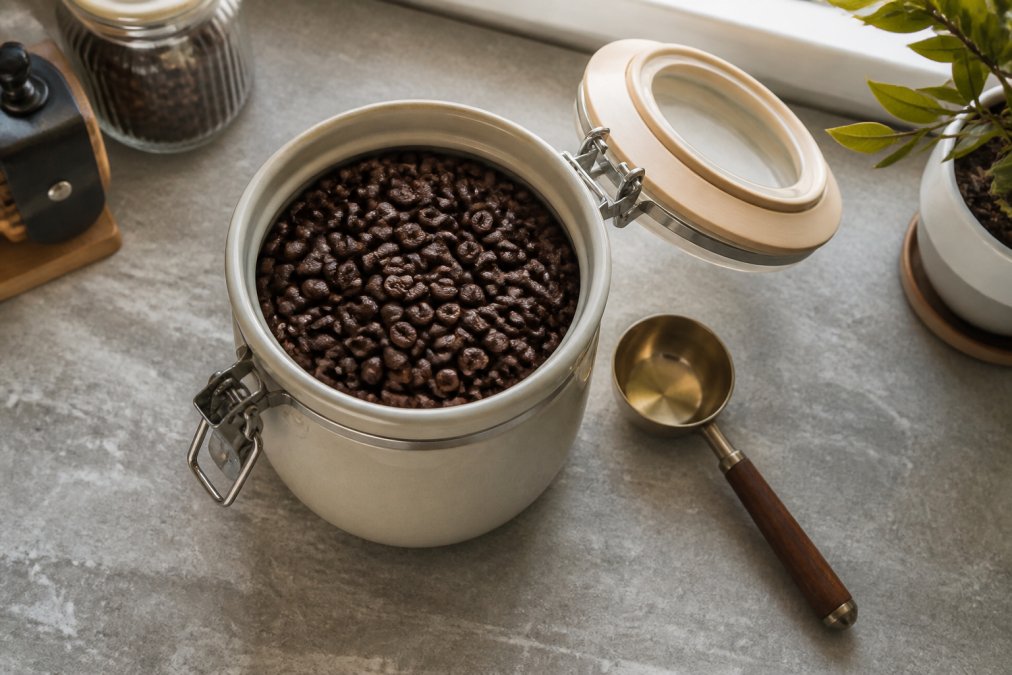
Store whole beans in an airtight, opaque container at room temperature, away from light, heat, and moisture. Skip the fridge and freezer for daily-use beans; condensation from temperature swings degrades them faster.
A practical storage checklist:
- Transfer beans to an airtight ceramic or opaque canister
- Keep the container in a cool, dark cabinet
- Store whole bean, not pre-ground, whenever possible
- Buy in two-week quantities rather than bulk
- Keep the original bag's roast date noted on the container
For longer storage, freezing whole beans in a vacuum-sealed bag works, but only if you thaw the full bag once and don't refreeze. Every thaw cycle introduces moisture.
Cost Per Cup, Shipping, and Cancellation: What Else to Check
Freshness is the headline, but cost per cup, shipping terms, and cancellation policy decide whether a subscription fits your routine. Here's the math and friction audit most guides skip.
Cost Per Cup: The Only Price Comparison That Matters
A bag price tells you almost nothing; what matters is cost per brewed cup, which swings widely based on dose, brew method, and bag size. Using a standard 1:16 coffee-to-water ratio, here's the math on a 12-ounce bag:
- Pour-over or drip (18 g dose): about 18 to 19 cups per 12-ounce bag
- French press (30 g dose): about 11 cups per bag
- Espresso (18 g double shot): about 18 to 19 shots per bag
- Moka pot (15 g dose): about 22 cups per bag
At $22.99 for a 12-ounce bag, that's roughly $1.20 to $2.05 per cup depending on brew method. A $16 bag that arrives two weeks post-roast and tastes flat is more expensive per enjoyable cup than a $23 bag roasted the day before it ships. Sample packs cost more per ounce, a six-pack of 2-ounce samples at $24.99 gives 12 ounces total, but you're paying for information, not volume. If a sample pack stops you from buying three full bags you wouldn't have finished, it pays for itself.

Shipping Windows: What "Fast" Actually Means
Roast-to-doorstep time is the variable most subscriptions don't publish. A common pattern is a 1 to 3 business day roast-to-ship window, then 2 to 5 business days in transit depending on carrier and distance, a realistic best case of 3 to 4 days post-roast and worst case of 8 to 10 days.
Three shipping details worth confirming before you subscribe:
- Roast day vs. ship day: Some roasters roast Monday and ship Wednesday. Others roast the morning your order is packed. The gap matters.
- Carrier and service level: Ground shipping across the country adds days that no roast-date stamp can fix.
- Free shipping thresholds: Free shipping on recurring orders changes the effective cost per cup, sometimes by 10 to 15 percent.
If a service will not tell you its typical roast-to-ship window, treat that as a freshness risk.
The Friction Audit: Pause, Skip, and Cancel
Subscription fatigue is real, and the exit process tells you how a service values your time. Before you commit, run this audit:
- Can you pause for one cycle without contacting support?
- Can you skip a single delivery from your account dashboard?
- Can you change frequency (weekly, biweekly, monthly) at any time?
- Can you swap the roast or origin before a shipment locks?
- Can you cancel online, or does it require a phone call or email?
- Is there a minimum commitment or cancellation fee?
A service that lets you pause, skip, and cancel in two clicks is built for long-term subscribers; one that requires a phone call during business hours retains you by friction, not quality.
Federal Trade Commission guidance on negative option subscriptions outlines the disclosure rules sellers must follow for recurring billing, which is worth reviewing if a service's cancellation terms feel unclear.
The best coffee subscription for freshness keeps the exit as easy as the entry; a phone-call-only cancellation signals how the service values your time.
Conclusion: Match the Subscription to Your Brewing Habits
The best coffee subscription for freshness isn't the one with the biggest origin list. It's the one that roasts after you order, prints the roast date, ships fast, and lets you leave without a fight. Match the model to your brewing habits, and freshness follows.
Johnny D's Brew roasts every order to spec, sources beans from trusted farms worldwide, and ships free to your door. Whether you drink espresso, pour-over, or drip, the freshness window stays open longer when the roast happens after you click buy.
Find your perfect roast and taste what roast-to-date coffee actually delivers.
Frequently Asked Questions
How long does coffee stay fresh after roasting?
Whole bean coffee hits peak flavor between 4 and 14 days after the roast date, then gradually fades over the next 4 to 6 weeks. Past that window, oils oxidize and the cup tastes flat. Pre-ground coffee stales much faster, often within a week, because more surface area meets oxygen. That is why roast-to-order services that print the roast date on the bag give you a real freshness advantage over warehouse stock.
Does roast-to-order shipping actually make a difference in flavor?
It can, if the roaster ships within a day or two of roasting. Beans roasted to order arrive within the first week of peak flavor instead of sitting on a shelf for weeks. The difference shows up most in lighter roasts and single-origin coffees, where bright acidity and floral notes fade first. Ask any roaster for the roast date before you buy, and treat a missing date as a red flag.
Is a coffee subscription worth it for daily drinkers?
For anyone brewing one or more cups a day, a subscription keeps fresh beans in the house without last-minute store runs. You set the delivery cadence to match your consumption, so bags arrive before you run out. Johnny D's Brew adds free US shipping on coffee and tea, which removes the per-order shipping cost that makes small bags expensive elsewhere. If you drink less than a bag a month, a sample pack is a better starting point.
Which coffee subscription is better, Atlas or Trade?
Both Atlas Coffee Club and Trade Coffee focus on variety and matching you with roasters, but neither roasts every bag to order the way a single-roaster service does. If freshness is your priority, compare how quickly each one ships after the roast date and whether the date is printed on the bag. Johnny D's Brew roasts to order and lists the roast date, so you can verify freshness instead of trusting a marketing claim.
How should I store coffee beans to keep them fresh?
Keep whole beans in an airtight, opaque container at room temperature, away from the stove, oven, and direct sun. Buy bags sized to what you drink in two to three weeks. Skip the freezer for daily-use beans, since repeated thawing introduces moisture; if you must freeze, portion into single-use bags and thaw once. Grind right before brewing, because ground coffee loses aroma within hours.