

Best Trade Coffee Alternatives: 2026 Comparison
Table of Contents
- Why Trade Coffee Alternatives Are Worth Comparing in 2026
- Atlas Coffee Club vs Trade Coffee: What Changes for Your Morning Cup
- Trade Coffee vs Bean Box: A Practical Head-to-Head
- Coffee Subscription Cost Comparison: What You Actually Pay Per Bag
- Coffee Subscriptions With Customizable Selections: Matching Beans to Your Brew Method
- Freshness, Sourcing, and Delivery: What to Check Before You Commit
- Best Trade Coffee Alternatives by Specific Reader Need
- Conclusion: Choosing Your Next Coffee Subscription
- Frequently Asked Questions
Last Updated: October 15, 2026
Why Trade Coffee Alternatives Are Worth Comparing in 2026
If you drink two cups a day, you spend more on coffee each year than on your phone plan, so the subscription you pick matters. Trade Coffee built its reputation on matching drinkers to roasters through a quiz, and earned it.
At Johnny D's Brew, we roast to order and ship free on every coffee and tea order, so the roast date on your bag is measured in days, not weeks.
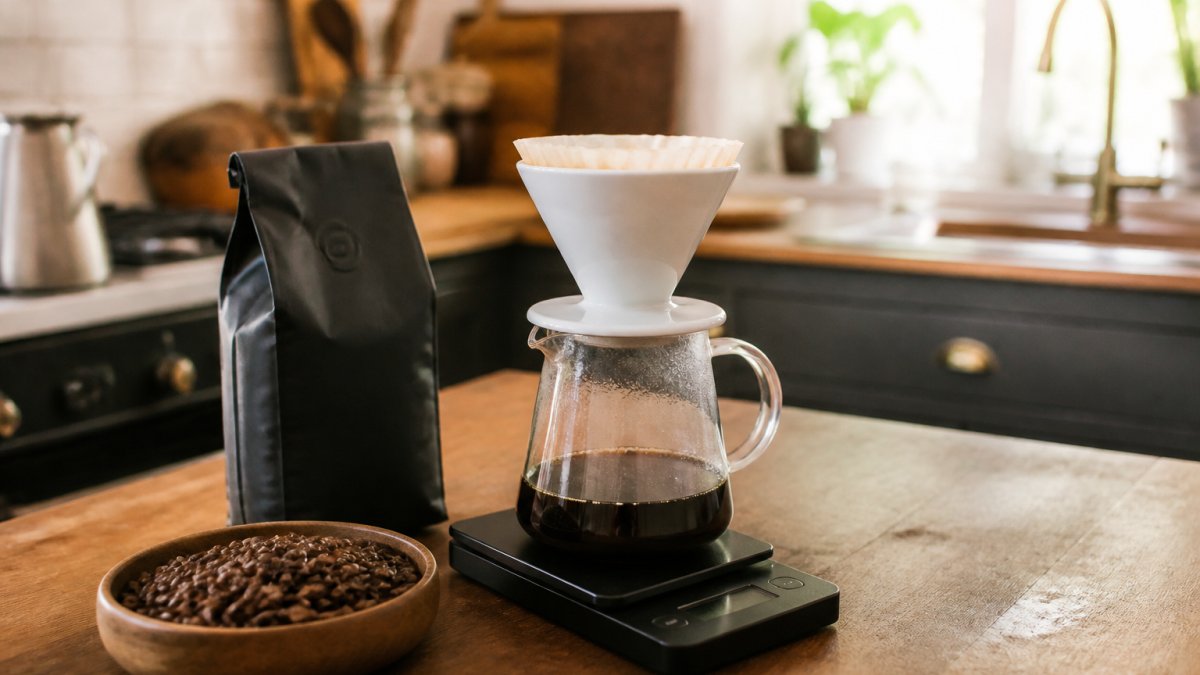
A few things worth knowing before you switch. According to Specialty Coffee Association guidance on freshness, roasted coffee stales fastest in the first two weeks, which is why roast-to-delivery timing beats brand prestige every time. The U.S. Food and Drug Administration guidance on food storage and labeling also treats roasted coffee as a perishable-adjacent product, so storage and transit time genuinely affect quality.
Below, we break down what changes between services, what you actually pay per bag, and which option fits your brewing routine.
Atlas Coffee Club vs Trade Coffee: What Changes for Your Morning Cup
The real difference between Atlas Coffee Club vs Trade Coffee comes down to variety versus control. Atlas sends a rotating single-origin from a different country each cycle with tasting notes and brewing tips. Trade lets you browse roasters and pick specific bags rather than accepting a curated pick.
Neither approach is wrong. If you enjoy discovery, the tour model is fun. If you already know you love Kenyan washed coffees, you want a catalog you can browse, not a surprise.
That is the case for a service like ours: a fixed, named lineup of single origins, including Ethiopia Natural and Kenya, so you reorder the same bag instead of hoping the rotation lands somewhere you like.

Trade Coffee vs Bean Box: A Practical Head-to-Head
Trade Coffee vs Bean Box is closer than most comparisons admit. Bean Box built its name on curated sampler boxes and gift-friendly packaging; Trade built its on algorithmic matching across a wide roaster network. Both ship whole bean by default and let you set delivery frequency.
They diverge at the bag level. Bean Box tends to bundle, great for gifting but not if you want six bags of one origin. Trade gives you more control over which roaster you buy from.
Our take: if you want to try many small quantities before committing, a sample pack beats a full subscription. Our Single Origin Favorites Sample Pack ships six 2oz packs, including Ethiopia, Kenya, Colombia, and Peru, for $24.99, so you can taste your way to a decision instead of guessing.

Coffee Subscription Cost Comparison: What You Actually Pay Per Bag
A coffee subscription cost comparison only means something when you normalize for bag size, shipping, and delivery frequency. A $16 bag and a $24 bag are not comparable if one is 8oz and the other 12oz, and shipping quietly changes the math. The number that decides your annual spend is cost per brewed cup: divide price by ounces, then by cups per ounce, then add shipping back in.
A standard 12oz bag of whole bean yields roughly 24 to 30 six-ounce brewed cups at a 1:16 ratio, depending on dose. A $22.99 bag lands near $0.77 to $0.96 per cup before shipping. Add $5 flat shipping on a single-bag order and it jumps to roughly $0.93 to $1.17 per cup. Two bags per shipment drops shipping to about $2.50 per bag and pulls the per-cup cost back under a dollar.
Our own lineup, with no shipping line item added:
| Option | Price | Approx. cups | Cost per cup (before shipping) | Best For |
|---|---|---|---|---|
| Single Origin Favorites Sample Pack | $24.99 | ~12 | ~$2.08 | Testing before committing |
| Best Sellers Sample Pack | $24.99 | ~12 | ~$2.08 | Blend and origin mix |
| Ethiopia Natural | $22.99 | ~24-30 | ~$0.77-$0.96 | Fruit-forward, natural process |
| Kenya | $22.99 | ~24-30 | ~$0.77-$0.96 | Bright, floral, high acidity |
| Colombia | $22.99 | ~24-30 | ~$0.77-$0.96 | Balanced daily cup |
| Breakfast Blend | $21.99 | ~24-30 | ~$0.73-$0.92 | Drip, French press, pour-over |
| Instant Coffee | $20.99 | 30 | ~$0.70 | Shift work, travel, office |
Sample packs look expensive per cup on purpose: you are paying for variety and the option to test before locking into a recurring charge, usually cheaper than one month of a subscription you cancel after two bags. Once you know your origin, the full bag turns the per-cup math in your favor.

Three cost traps to check before you subscribe anywhere:
- Shipping that only disappears at a threshold. A free-shipping minimum of $30 to $40 forces you to buy more than you drink to avoid a fee. If you brew one bag a month, you either pay shipping or over-order and let beans stale.
- Frequency you cannot slow down. A weekly default on a 12oz bag outpaces most two-cup-a-day households. Biweekly or monthly is usually the honest cadence, and the ability to change it without a phone call is worth real money.
- Per-bag price that hides a smaller bag. A 10oz bag at $19 is not cheaper than a 12oz bag at $22.99. Divide by ounces first, every time.
A quick worked example: a $19 bag of 10oz coffee with $5 shipping yields about 20 to 25 cups, or roughly $0.96 to $1.20 per cup. A $22.99 12oz bag with free shipping yields about 24 to 30 cups, or roughly $0.77 to $0.96 per cup. The 'more expensive' bag is cheaper to drink.
Our single origins sit in the low twenties and ship free on every coffee and tea order, removing the hidden checkout cost most subscriptions add and keeping the per-cup number stable whether you order one bag or three.
Coffee Subscriptions With Customizable Selections: Matching Beans to Your Brew Method
Customizable selections matter most when they match your brewer. A medium roast built for drip tastes thin as espresso, and a dark, oily espresso roast can turn harsh in a pour-over.
Our approach is to name the brew method on the bag rather than hide it behind a quiz result:
Single Origin Favorites Sample Pack →
- Breakfast Blend ($21.99, medium roast): balanced and mellow, built for drip machines, French presses, and pour-overs.
- Cold Brew Coffee ($21.99, medium roast): chocolate, toffee, and floral tones that hold up to a long cold steep or a nitro tap.
- Instant Coffee ($20.99, 30 servings): for 12-hour shifts, travel, and office desks where a brewer is not an option.
If you are picky about origin, our single-origin lineup is fixed rather than rotating, so Ethiopia Natural and Kenya stay on the shelf instead of selling out mid-cycle.
Freshness, Sourcing, and Delivery: What to Check Before You Commit
Freshness is the one variable you can verify before you buy, and most shoppers never ask. Here is a checklist you can run against any service, including ours.
1. Roast-to-ship window. Ask how many days pass between roasting and the coffee leaving the facility. A roast-to-order operation typically ships within one to three business days of the roast date.
**2.
3. Origin detail on the product page. Grower or producer group, region, altitude, variety, and process are the five fields that separate traceable coffee from marketing copy. Ours lists all five.
4. Shipping cost and transit time. Free shipping on coffee and tea removes a recurring cost that adds up over a year.
5. Storage between delivery and brew. The U.S. Food and Drug Administration guidance on food storage and labeling treats roasted coffee as a perishable-adjacent product, so storage and transit time genuinely affect quality.
6. Subscription terms you can actually use. Pause, skip, swap, and cancel policies are practical decision factors brief roundups rarely address.
7. Replacement and refund handling. Ask what happens if a bag arrives damaged, stale, or wrong.
Run these seven checks against any service on your shortlist. The ones that answer all seven without hesitation are worth a recurring charge.
Best Trade Coffee Alternatives by Specific Reader Need
The right pick depends on what you do every morning, not on which service markets loudest.
- If you want to test before committing: start with our Single Origin Favorites Sample Pack or Best Sellers Sample Pack, both $24.99 for six 2oz packs.
- If you brew drip or pour-over daily: Breakfast Blend at $21.99 is our most versatile bag.
- If you drink cold brew or nitro: Cold Brew Coffee at $21.99 is built for a slow, cold steep.
- If you work long shifts: Instant Coffee at $20.99 gives you 30 servings with no equipment.
- If you only drink specific origins: Ethiopia Natural and Kenya stay in the lineup, so reordering is not a gamble.
- If you want a fruit-forward natural: Ethiopia Natural brings milk chocolate, fruity, and caramel notes.
For most readers, we recommend starting with a sample pack, then moving to a full bag of whichever origin you finished first.
Conclusion: Choosing Your Next Coffee Subscription
The hard part is not finding a subscription; it is finding one where the roast date still means something when the bag lands on your counter. That is why we roast to order, ship free on coffee and tea, and keep a fixed lineup of single origins you can reorder. Start with the Single Origin Favorites Sample Pack, find your origin, then let us deliver it fresh. Find your perfect roast at Johnny D's Brew.
Frequently Asked Questions
What is the best Trade Coffee alternative for freshly roasted beans?
Look for roasters that roast to order and print the roast date on the bag. Johnny D's Brew roasts in small batches after you order, so the beans ship within days of roasting rather than weeks. Their single-origin coffees, such as Ethiopia Natural and Kenya, list the farm, region, altitude, and processing method, which lets you judge freshness and traceability before buying. Sample packs at $24.99 let you test several origins without committing to a full bag.
How do coffee subscriptions compare on price and shipping?
A coffee subscription cost comparison should include the bag price, shipping, and how often you receive deliveries. Johnny D's Brew sells single-origin coffees at $22.99 per bag and blends at $21.99, with free US shipping on all coffee and tea. Because there is no required subscription, you can order one bag at a time or set a recurring delivery that fits your consumption. Always calculate the total delivered cost per ounce, not just the sticker price.
Can you choose your own coffee with a subscription?
Yes. Coffee subscriptions with customizable selections let you pick specific origins, roast levels, or brew methods instead of receiving a surprise bag. Johnny D's Brew gives you direct control: choose Ethiopia Natural for fruity, medium-light notes, Colombia for dried orange and chocolate, or Breakfast Blend for a smooth drip coffee. You can also start with the Single Origin Favorites Sample Pack to compare six origins side by side before committing to a full-size bag.
Which coffee subscription is most like Trade Coffee?
Services that emphasize personalized recommendations and a rotating selection of specialty coffee are closest in model. Atlas Coffee Club and Bean Box both offer curated discovery, while Johnny D's Brew focuses on roast-to-order freshness and transparent origin details. If you want a quiz-driven match, Atlas or Bean Box may appeal. If you prefer to choose exact single-origin lots and know the roast date, Johnny D's Brew is a direct alternative.
Are coffee subscriptions worth the cost?
They are worth it if you drink coffee daily and value freshness over buying from a grocery shelf. At $22.99 per bag with free shipping, Johnny D's Brew costs more than mass-market beans but less than many specialty subscriptions once shipping is added. The trade-off is that you get a roast date within days of delivery, origin transparency, and the ability to pause or skip a delivery when you have too much coffee on hand.