

Best Ways to Store Coffee Beans at Home: 2026 Guide
Table of Contents
- Why Storing Coffee Beans Correctly Matters
- How Long Do Coffee Beans Stay Fresh?
- The Four Enemies of Coffee Freshness
- Best Coffee Storage Containers: What to Look For
- Freezing Coffee Beans: A Step-by-Step Workflow
- Common Coffee Storage Mistakes to Avoid
- Frequently Asked Questions
Last Updated: October 13, 2026
Why Storing Coffee Beans Correctly Matters
Roasted coffee begins losing its best qualities within days of leaving the roaster, which is why the best ways to store coffee beans at home center on one goal: slowing the clock on oxidation.
We roast to order precisely because freshness is fleeting. Once a bag is opened, oxygen, moisture, heat, and light all work against the oils and aromatics that give coffee its character. Get it wrong and even premium single-origin beans fade fast.
How Long Do Coffee Beans Stay Fresh?
There is no single freshness window, because beans change on a curve rather than falling off a cliff. The useful question is not "how long do they last" but "where are they on the curve right now, and what should I do about it."
The Freshness Curve After Roasting
- Days 1-3 (degassing peak): Beans release a large amount of carbon dioxide. Brews can taste sharp, gassy, or oddly flat because CO2 interferes with water extracting solubles. This is the worst window to judge a roast.
- Days 4-14 (peak window): Degassing slows, aromatics are at their most concentrated, and flavor is balanced. Most roasters consider this the sweet spot for filter and espresso.
- Days 15-30 (gradual decline): Oxidation starts to outpace the remaining aromatics. The cup is still good but loses top-end sweetness and clarity.
Roast Level Changes the Clock
- Light roasts tend to hold their acidity and distinctive origin notes longer, often staying enjoyable for four to six weeks when stored well, because they retain more of the bean's original structure.
- Dark roasts have more surface oil exposed to oxygen and typically peak earlier and fade faster, often within two to three weeks.
- Decaf is a special case: the decaffeination process leaves beans more porous, so they stale faster than their caffeinated counterparts at the same roast level.
How to Tell Where Your Beans Are
Use your senses, not the calendar alone:
- Aroma: Fresh beans smell sweet, complex, and slightly fruity or floral. Stale beans smell flat, papery, or like cardboard.
- Flavor: A drop in sweetness and a rise in dull, woody, or bitter notes signals oxidation.
- Brewing behavior: Stale beans often drain faster in a pour-over and produce thinner crema in espresso, because the CO2 that once slowed extraction is gone.
What This Means for Buying and Storing
Buy in quantities you can finish inside the peak window, typically a one- to two-week supply for daily brewers. If you want to keep beans past four weeks, freeze them at their peak rather than waiting until they taste tired; freezing preserves quality, it does not restore it. And always trust the roast date over any "best by" label, since the roast date is the only number tied to the actual freshness curve.
Specialty Coffee Association guidance on freshness and storage
The Four Enemies of Coffee Freshness
Freshness has four main enemies, and most storage mistakes come down to leaving one of them unguarded. Understanding what each one does to your beans makes the right choices obvious.
Oxygen and Air Exposure
Oxygen is the primary cause of stale coffee. It reacts with the oils in roasted beans and steadily strips away the aromatics that make a cup taste vibrant. Every time you open a container, fresh air rushes in. That is why an airtight seal matters more than almost any other feature.
Moisture, Heat, and Light
Moisture, heat, and light each accelerate the damage oxygen starts. Humidity makes beans absorb water and turn dull. Heat speeds up the chemical reactions that flatten flavor. Light breaks down the compounds responsible for aroma. Keep beans in a cool, dark place, and never store them above the coffee maker or beside the stove.
Best Coffee Storage Containers: What to Look For
The best coffee storage containers combine an airtight seal, an opaque body, and a size that matches how fast you drink.
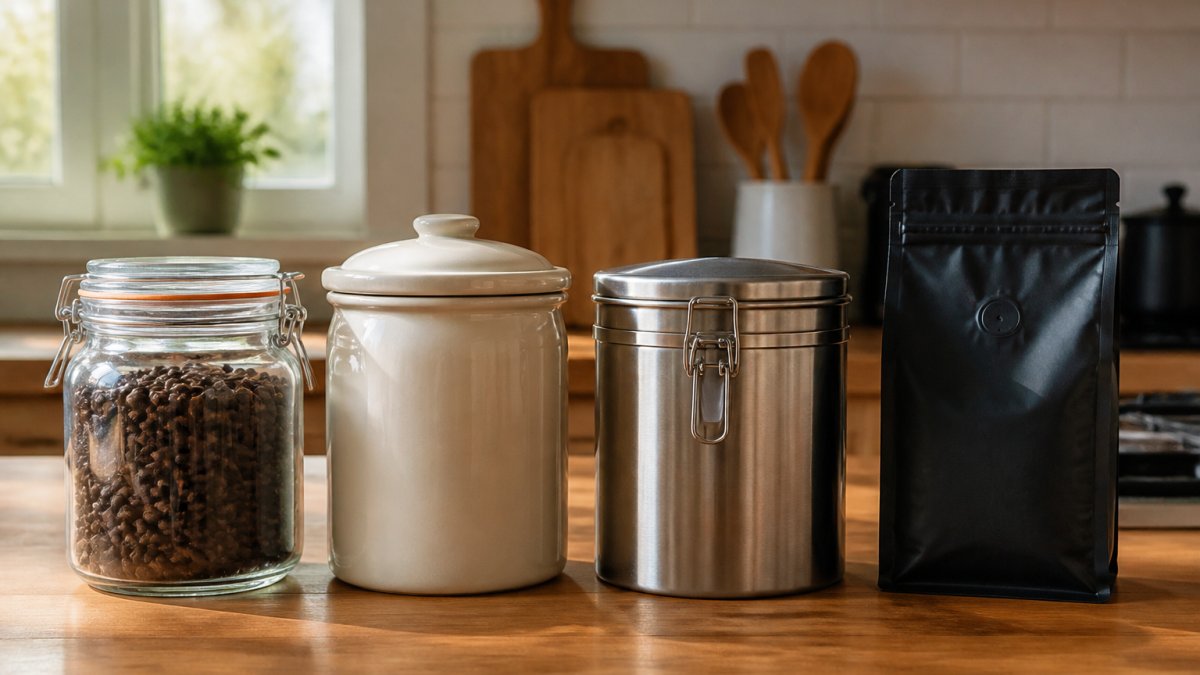
| Container Type | Blocks Light | Airtight Seal | Best For |
|---|---|---|---|
| Glass jar with gasket | No | Yes | Short-term, visible supply |
| Ceramic canister | Yes | Yes | Countertop everyday storage |
| Stainless steel tin | Yes | Yes | Durability and light blocking |
| Original bag with valve | Partly | Yes | First weeks after opening |
Airtight Gaskets and One-Way Valves
An airtight gasket is the single most important feature in any storage canister. A silicone or rubber seal keeps outside air from cycling in every time the lid closes. A one-way valve, found on quality coffee bags, lets carbon dioxide escape after roasting without letting oxygen back in. If your container has a weak seal, everything else is wasted effort.
Opaque vs. Transparent Materials
Opaque containers win on light protection. Glass and clear plastic look attractive on a shelf, but light degrades aroma compounds over time. If you prefer a glass jar, store it inside a dark cabinet rather than on an open counter. Ceramic and non-reactive metal canisters block light entirely and are the more reliable choice for daily use.
Freezing Coffee Beans: A Step-by-Step Workflow
Freezing is the only home method that meaningfully pauses staling, but only if you control two variables: portion size and moisture. The goal is to open the freezer exactly once per brewing window, so beans never cycle between frozen and room temperature.
How to Portion Before Freezing
Portion by how much you brew in about a week, not by bag size. A typical home brewer using 18-20 grams per cup and two cups a day goes through roughly 250-280 grams in a week, so a one-pound bag splits cleanly into two freezer portions.
Use one of these formats, in order of preference:
- Vacuum-sealed bags, remove the most air and hold up best over months.
- Heavy-duty freezer bags with the air pressed out, cheap, effective, and easy to label.
- The original bag with its one-way valve, taped shut, acceptable for short freezes of a few weeks.
Avoid thin sandwich bags and reusable silicone pouches with weak seals; both let freezer air and odors migrate in.
Sealing, Labeling, and Placement
- Divide beans into single-use portions.
- Press or vacuum out as much air as possible, then seal.
- Write the roast date and the freeze date on each bag, the roast date is what tells you how much life is left.
- Place bags in the coldest, most stable part of the freezer, not the door. The door is the warmest zone and swings in temperature every time it opens.
- Keep beans away from strongly scented foods like onions, fish, or frozen herbs; coffee oils absorb odors readily.
Thawing Without Condensation
The single biggest mistake is opening a frozen bag while it is still cold. Cold beans pull moisture out of the air, and that condensation lands directly on the oils. The fix is simple:
- Move one portion from the freezer to the counter and let it sit sealed for 30-60 minutes, or overnight if the bag is large.
- Open only after the bag reaches room temperature and no visible moisture forms on the outside.
- Grind immediately after opening, and brew within a day or two for best results.
If you are in a hurry, you can grind frozen beans directly, some brewers prefer it because the beans shatter more evenly, but you must brew that portion right away and never return it to the freezer.
The No-Refreeze Rule
Never refreeze thawed beans. Each freeze-thaw cycle drives moisture into the bean's cell structure, and that moisture accelerates the same staling reactions you were trying to prevent. If you thawed too much, brew it, share it, or accept a slightly flatter cup, but do not put it back.
USDA food storage and freezing guidance
Common Coffee Storage Mistakes to Avoid
Most coffee storage mistakes trace back to a handful of habits that quietly ruin freshness. Avoid these and your beans will hold their flavor far longer.
- Storing beans in the refrigerator, where moisture and odors collect
- Leaving beans in a sunny spot or near the stove or oven
- Buying more than you can finish within a few weeks
- Grinding the entire bag at once instead of grinding just before brewing
A common mistake is trusting a decorative canister that looks airtight but lets air slip past a thin lid. Test the seal before you commit. If you can feel air moving when you press the lid, it is not airtight enough for coffee.
Frequently Asked Questions
What is the enemy of coffee beans?
The main enemies of coffee beans are oxygen, moisture, heat, and light. Oxygen causes oxidation, which makes beans go stale and lose their flavor compounds. Moisture can ruin texture and encourage mold. Heat speeds up the staling process. Light breaks down the oils that give coffee its aroma. Keeping beans in an airtight, opaque container in a cool, dark place addresses all four.
Is it better to store coffee beans in their original bag or a canister?
The original bag with a one-way valve works well for short-term storage because the valve releases carbon dioxide without letting oxygen in. For everyday use, transfer beans to an airtight, opaque container. If you keep the original bag, squeeze out excess air before resealing and place it inside an opaque container. Either method works if the beans stay sealed and away from light and heat.
Should you store coffee beans in the freezer?
Yes, for long-term storage. Freezing coffee beans can preserve freshness for up to two months if done correctly. Portion beans into small, airtight bags or containers so you only thaw what you'll use. Never refreeze thawed beans, and let frozen beans come to room temperature before grinding. For beans you'll use within two weeks, a cool, dark cabinet is simpler.
Can coffee beans be stored in the refrigerator?
The refrigerator is not ideal for coffee beans. The constant opening and closing causes temperature fluctuations and exposes beans to moisture and food odors. Beans absorb smells easily, which affects flavor. If you must use the fridge, seal beans in an airtight container and place it at the back where temperature is most stable. The freezer is a better option for long-term storage.
How long do coffee beans stay fresh after opening?
Whole beans stay fresh for about two to four weeks after opening if stored in an airtight, opaque container at room temperature. After that, flavor and aroma decline. Ground coffee goes stale much faster, often within a week. For the best cup, buy only what you'll use in two weeks, or freeze the rest in small portions.
What is the best container for storing coffee beans?
The best container is airtight, opaque, and made from a non-reactive material like glass, ceramic, or stainless steel. Look for a strong gasket seal and a one-way valve if you're storing freshly roasted beans. Avoid clear plastic or thin containers that let light and air in. Size matters too: choose a container that fits your beans snugly to minimize air exposure.
Keeping coffee at its peak takes a little planning, but the payoff is a noticeably better cup every morning. At Johnny D's Brew, we roast to order so your beans arrive at their freshest, and our single origins, blends, and flavored varieties are sourced from trusted farms for a smooth, rich result. With free US shipping on coffee and tea, restocking fresh beans is simple and reliable.
Find your perfect roast and taste what proper freshness does for your daily brew.