

High Quality Tea Benefits: A Complete Guide
Table of Contents
- Why High Quality Tea Delivers Real Health Benefits
- The Science Behind Tea's Antioxidant Power
- How to Identify High Quality Loose Leaf Tea
- Fresh Jasmine Green Tea Benefits and Sourcing
- Best Brewing Practices for Maximum Health Benefits
- High Quality Tea and Cardiovascular Health
- Metabolism, Weight Management, and Tea Quality
- Conclusion: Making High Quality Tea Part of Your Daily Routine
- Frequently Asked Questions
Last Updated: September 20, 2026
Why High Quality Tea Delivers Real Health Benefits
Understanding the high quality tea benefits starts with recognizing that the difference between average tea and high quality tea isn't just about taste. It's about what's actually in your cup. When you brew high quality tea, you're getting a concentrated dose of compounds that your body can actually use, polyphenols, catechins, flavonoids, and L-theanine that work together in ways generic tea bags simply don't deliver.
At Johnny D's Brew, we've spent years sourcing premium loose-leaf varieties because we understand that quality matters. The leaves you choose determine everything: how many beneficial compounds survive the brewing process, how your body absorbs them, and what you actually feel after drinking. This guide breaks down exactly what makes high quality tea worth the investment and how to get the most from every cup.

High quality tea benefits extend across multiple systems in your body. From cardiovascular health to metabolism to mental clarity, the science is straightforward, but only if you're starting with the right leaves.
The Science Behind Tea's Antioxidant Power
Tea contains powerful antioxidants that neutralize free radicals in your body. These aren't just marketing claims. The antioxidant compounds in tea, particularly catechins and polyphenols, work at the cellular level to reduce oxidative stress, which is linked to aging, inflammation, and chronic disease.
The type of tea matters enormously. Green tea retains more catechins than black tea because it undergoes less processing. White tea contains even higher levels of certain polyphenols. Oolong falls somewhere in between, with a unique balance of compounds created during its partial fermentation.

What most guides miss is that oxidative stress isn't some abstract concept, it's your cells getting damaged by unstable molecules. Antioxidants stabilize those molecules. When you drink high quality tea consistently, you're actively reducing that cellular damage. The research consistently shows that people who consume tea regularly have lower markers of oxidative stress compared to non-drinkers.
How to Identify High Quality Loose Leaf Tea
High quality loose-leaf tea has visible characteristics that separate it from broken fannings and dust found in tea bags. Look for whole leaves that are intact, with consistent color and no visible stems or debris. The leaves should smell vibrant and fresh, not musty or flat.
Origin matters. Single-origin teas from specific regions, Darjeeling, Sencha, Tie Guan Yin, have terroir, meaning the soil, altitude, and climate imprint distinct flavor profiles and compound concentrations. A Darjeeling from a specific estate in a specific year will have different catechin levels than a generic "Darjeeling blend."
Harvest timing is critical. First flush teas (picked in spring) contain higher concentrations of L-theanine and certain polyphenols compared to later harvests. Second flush teas develop different compounds during the summer heat. Knowing when your tea was harvested tells you what you're getting nutritionally.
Check the packaging date. High quality tea should have a recent harvest date printed clearly. Tea begins losing potency after six months of storage, especially if exposed to light, heat, or air. If you can't find a harvest date, that's a red flag.
Fresh Jasmine Green Tea Benefits and Sourcing
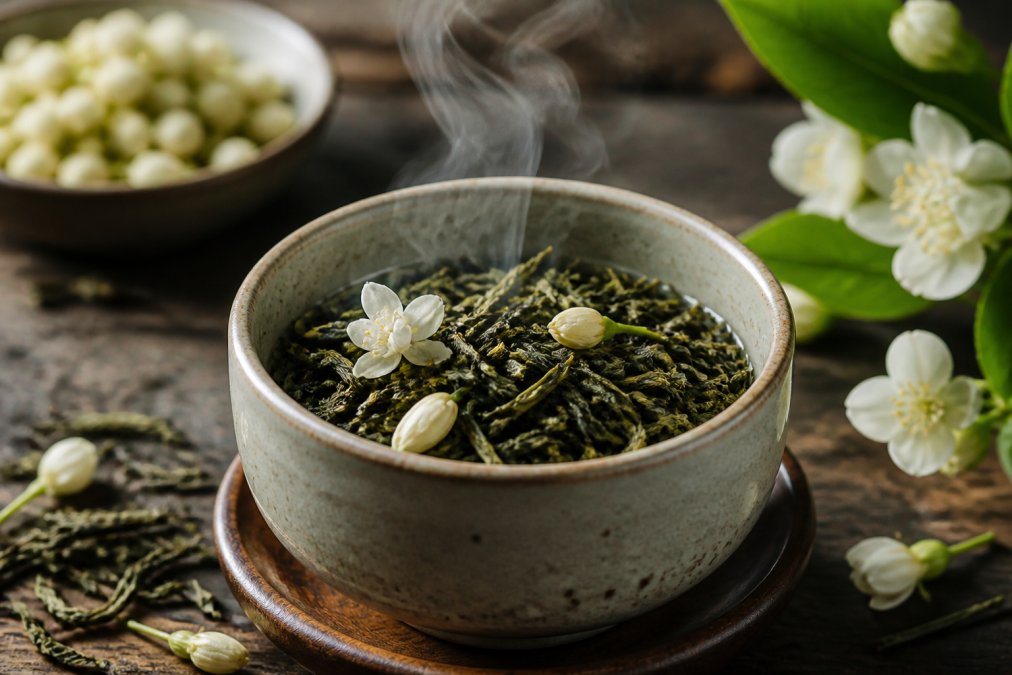
Jasmine green tea combines the antioxidant power of green tea with the calming properties of jasmine flowers. The green tea base provides the catechins and polyphenols; the jasmine blossoms add compounds that promote relaxation without sedation. This is why jasmine green tea is often recommended for afternoon drinking, you get the mental clarity from L-theanine without the jittery edge from excessive caffeine.

The sourcing process for jasmine tea is labor-intensive, which is why quality matters. Premium jasmine green tea is made by hand-pairing fresh jasmine blossoms with high-quality green tea leaves at precisely the right moment, when the flowers are at peak fragrance and the tea leaves are ready to absorb those aromatics. This pairing can't be rushed. Lower-quality jasmine teas use jasmine oil or flavoring instead of real flowers, which delivers the taste but misses the therapeutic compounds entirely.
Johnny D's Brew sources jasmine green tea from regions known for this specific craft. Our Jasmine blend uses hand-picked green tea paired with fresh jasmine blossoms, creating a tea that's medium-bodied, sweet, and smooth enough for multiple steepings. Each cup delivers the full spectrum of benefits from both the tea and the flowers.
When you brew jasmine green tea properly, you're extracting L-theanine, which promotes calm focus; GABA, which reduces anxiety; and linalool from the jasmine, which has mild sedative properties. Together, these compounds create a unique mental state, alert but relaxed. That's not possible with jasmine flavoring alone.
Best Brewing Practices for Maximum Health Benefits
Brewing temperature and time directly determine how many beneficial compounds end up in your cup. This is where most people lose value without realizing it.
For green teas, use water between 160-180°F and steep for 3-4 minutes. Too hot, and you extract bitter tannins while destroying some of the delicate catechins. Too cool, and the beneficial compounds don't fully dissolve. Too long, and you get that astringent, unpleasant taste that makes people think they don't like green tea.
For black teas, use 200-212°F water and steep 4-5 minutes. Black tea's compounds are more stable at higher temperatures because of how the leaves are processed.
White tea needs the gentlest treatment, 160°F water, 2-3 minutes. White tea is the least processed, so its delicate polyphenols are most vulnerable to heat damage.
Water quality matters more than most people realize. Chlorinated tap water can interact with tea compounds and affect flavor and absorption. Filtered water is ideal. If your water is very hard (high mineral content), consider a simple pitcher filter. Soft water actually extracts tea compounds more efficiently.
Steep in a proper vessel, ceramic, glass, or cast iron work well. Avoid metal infusers with tiny holes that restrict leaf expansion. Loose leaves need room to unfurl fully, which is how they release their compounds into the water.
High Quality Tea and Cardiovascular Health
Tea's impact on cardiovascular health is one of the most researched areas in nutrition science. The polyphenols and catechins in tea work through multiple mechanisms: they improve blood vessel function, reduce inflammation in artery walls, and help regulate blood pressure.
Regular tea consumption is associated with improved cholesterol profiles.
Metabolism, Weight Management, and Tea Quality
Tea contains caffeine and catechins that work together to slightly increase metabolic rate and fat oxidation. This doesn't mean tea is a weight loss solution, it's not. But it does mean that high quality tea supports your metabolism more effectively than other beverages.
Conclusion: Making High Quality Tea Part of Your Daily Routine
Building a tea habit requires two things: access to high quality tea and the knowledge to brew it properly. The investment in better leaves pays dividends, you'll taste the difference immediately, and your body will respond over weeks with improved energy, better focus, and measurable improvements in how you feel.
| Tea Type | Ideal Water Temperature | Steep Time | Best For |
|---|---|---|---|
| Green Tea | 160-180°F | 3-4 minutes | Antioxidants, calm focus |
| Black Tea | 200-212°F | 4-5 minutes | Cardiovascular health, energy |
| White Tea | 160°F | 2-3 minutes | Delicate polyphenols, gentle |
| Oolong | 190-200°F | 3-5 minutes | Balanced metabolism support |
| Jasmine Green | 160-180°F | 3-4 minutes | Relaxation + mental clarity |
Frequently Asked Questions
What happens if you drink high quality tea daily?
Daily consumption of high quality tea provides consistent exposure to polyphenols, catechins, and flavonoids that support cardiovascular function, metabolic health, and inflammation management. Premium loose-leaf varieties retain more of these beneficial compounds than mass-produced tea bags. Most people experience sustained energy from L-theanine and caffeine without the crash associated with lower-quality blends. Long-term daily consumption may contribute to improved cholesterol levels and blood pressure regulation, though individual results vary based on overall diet and lifestyle.
How can you distinguish between low-grade and high-quality tea leaves?
High quality loose-leaf tea shows intact, whole leaves with consistent color and aroma, while low-grade tea contains dust, broken fragments, and stems. Premium tea has a vibrant appearance specific to its type, jasmine green tea should display bright green leaves paired with visible jasmine blossoms, not artificial flavoring. Smell the dry leaves: quality tea has a complex, inviting fragrance. When steeped, high quality tea produces clear, flavorful infusions with multiple steepings possible, whereas inferior tea becomes weak after one steep. Check for sourcing transparency and single-origin or named blend descriptions on packaging.
Does the quality of tea leaves affect the antioxidant content?
Yes, significantly. High quality tea leaves retain more antioxidants because they're harvested at peak ripeness and processed to preserve their polyphenol and catechin content. Premium loose-leaf tea typically contains 25-50% more antioxidants than dust-based tea bags, which lose potency through fragmentation and oxidation. Proper storage in cool, dry conditions also preserves antioxidant levels in quality tea. Single-origin, hand-picked varieties like jasmine green tea maintain superior antioxidant profiles compared to mass-produced blends, directly impacting the health benefits you receive from each cup.
What is the best way to brew high quality tea to maximize health benefits?
Use water heated to 160-180°F for green teas and 200-212°F for black or roasted varieties like hojicha. Steep for 3-5 minutes depending on leaf type, longer steeping extracts more catechins and polyphenols. Use loose-leaf tea rather than bags for better water circulation and nutrient extraction. Start with filtered or high-quality water, as minerals and contaminants affect flavor and nutrient absorption. Allow the tea to cool slightly before drinking to preserve heat-sensitive compounds. Multiple steepings of quality loose-leaf tea release additional antioxidants and flavonoids, extending both flavor and health benefits across 2-3 infusions.