

How to Identify Truly Fresh Roasted Coffee: A 2026 Guide
Table of Contents
- Why Most Coffee Drinkers Get Freshness Wrong
- Roast Date vs Best By Date: Which One Actually Matters
- The Degassing Timeline: Why Fresh Roasted Coffee Behaves Differently
- How to Store Coffee Beans Properly
- Signs of Stale Coffee Beans You Can Spot Without Brewing
- Home-Testing Methods: The Bloom Test and Beyond
- Packaging Technology That Protects Fresh Roasted Coffee
- Conclusion
- Frequently Asked Questions
Last Updated: September 16, 2026
Why Most Coffee Drinkers Get Freshness Wrong
Identifying truly fresh roasted coffee starts with unlearning one habit: trusting the front label. That label is marketing. The information that matters is printed in small type on the back, and most shoppers never look at it.
Roast Date vs Best By Date: Which One Actually Matters
Fresh roasted coffee is best identified by a roast date within the last two to four weeks for most brewing methods. Espresso drinkers often prefer a slightly longer rest, while pour-over and drip drinkers get the clearest flavor from beans rested about a week.
The Degassing Timeline: Why Fresh Roasted Coffee Behaves Differently
Freshly roasted beans are not finished products. Roasting builds carbon dioxide inside the bean's porous structure, and after the roast ends that trapped CO2 slowly escapes, a process called degassing, for days or weeks depending on roast level, bean density, and processing method.
Why Carbon Dioxide Interferes With Brewing
When hot water hits ground coffee, it needs to dissolve soluble compounds, sugars, acids, lipids, and carry them into the cup. Trapped CO2 rushes out and forms a gas barrier around each particle, so water channels around the grounds instead of saturating them evenly, producing uneven extraction: some parts bitter, others sour, all in the same cup.
A Practical Degassing Timeline
Timing varies by roast level and bean, but most roasters work from a rough shared map:
- Days 1-2, Peak off-gassing. CO2 release is most aggressive. Espresso gushes and tastes sharp or thin; pour-over blooms violently but extracts unevenly. This coffee is not bad, just too young.
- Days 3-7, Rapid decline in CO2 release. The bean settles and water penetrates grounds more evenly. Many filter drinkers find this the sweet spot for bright, aromatic cups.
- Days 7-14, The classic flavor window. Degassing slows to a background rate. Aroma is layered, acidity reads clearly, and the finish holds together, the range most specialty roasters target when they ship.
- Days 14-21, Early oxidation. CO2 is largely gone and oxygen reacts with oils and aromatics. The cup is still drinkable but loses top notes first, florals and fruit fade before chocolate and caramel.
- Beyond day 21, Stale territory. Volatile compounds have broken down substantially. The coffee is safe but dull, papery, or flat.
Rest Periods Differ by Brew Method
One timeline does not fit every brewer. The general pattern:
- Espresso: 5-14 days post-roast. Espresso is unusually sensitive to CO2 because of the pressure and short contact time. Too fresh and the shot runs fast and tastes sour; well-rested beans give the syrupy body and sweetness drinkers expect.
- Pour-over and drip: 4-10 days. Filter brewing has longer contact time and more tolerance for residual CO2, so it can be enjoyed earlier.
- French press and cold brew: 3-14 days. Immersion methods are most forgiving because the grounds stay in contact with water long enough to overcome early off-gassing.
The Counterintuitive Rule
If a bag arrives and the coffee tastes flat, sour, or strangely sharp, do not assume it is stale. Check the roast date: if it was roasted within the last three or four days, the beans are too fresh, not too old. Seal the bag, rest it a few more days at room temperature, and brew again.
What This Means for Buying
The degassing timeline is why roast-to-order coffee is not automatically better than coffee roasted a week ago, it is better only if you understand when to open the bag. A roaster shipping beans the day they leave the drum hands you a product that needs rest; one shipping at day three or four hands you coffee ready to brew.
How to Store Coffee Beans Properly
Storing coffee beans properly means protecting them from four enemies: oxygen, moisture, heat, and light. Get those right and you extend the flavor window considerably.
- Store beans whole, and grind immediately before brewing
- Keep them in an opaque, airtight container at room temperature
- Buy in quantities you will finish within two to three weeks
- Avoid clear glass jars on open shelves, where light degrades oils
- Skip the freezer unless you are storing a large sealed batch long term
Signs of Stale Coffee Beans You Can Spot Without Brewing
You can often judge staleness before grinding a bean. Two checks do most of the work: appearance and smell.
Visual Cues: Matte vs Glossy Bean Appearance
Bean appearance tells a story about oil migration. Freshly roasted beans start matte and dry; over days and weeks, oils migrate to the surface, giving older beans a glossy sheen.
Aroma and Sensory Evaluation at Home
Smell the bag the moment you open it. Fresh beans hit you with a distinct, layered aroma: fruit, chocolate, floral notes, or spice depending on origin. Stale beans smell flat, papery, or faintly like cardboard.
Home-Testing Methods: The Bloom Test and Beyond
The bloom test is the fastest home method for confirming freshness. Here is the version with benchmarks.
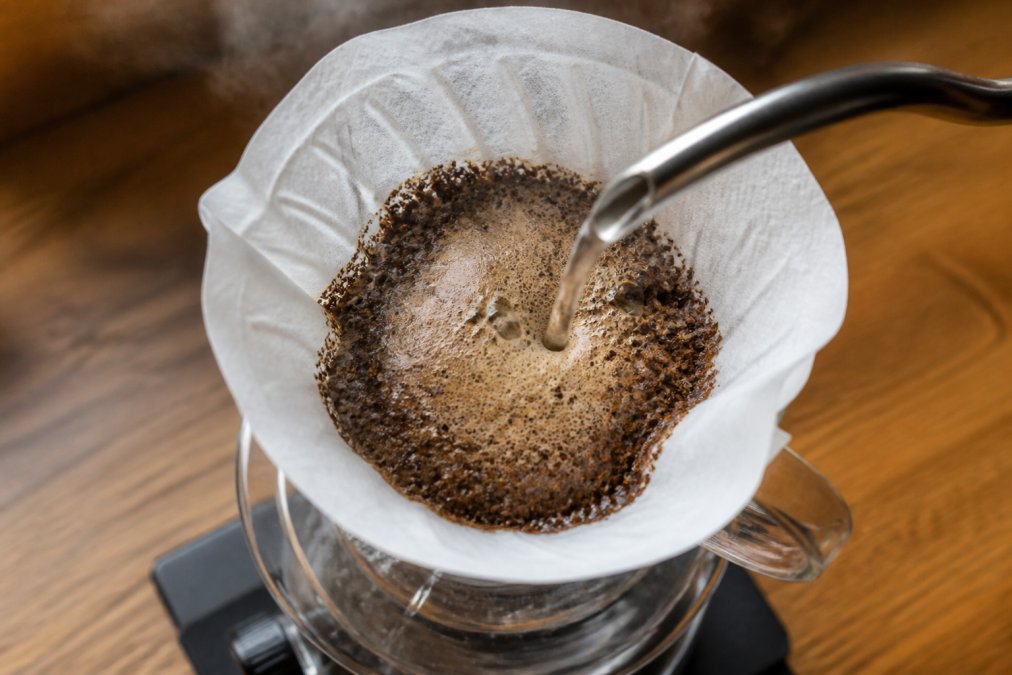
The Bloom Test, With Visual Benchmarks
Grind 15-20 grams to a medium-fine setting, place it in a pour-over filter or mug, and pour roughly twice the coffee's weight in water just off the boil, about 200°F. Watch for 30 seconds.
What you are looking for:
- Strong bloom: The bed puffs up, domes above its original level, and releases visible bubbles. Aroma hits you immediately, a clear sign of retained CO2 and recent roasting.
- Moderate bloom: The grounds expand slightly with a few bubbles, but the bed stays mostly flat. Typical of coffee in the 2-4 week range, still drinkable, past peak.
- Weak or no bloom: The grounds barely move and water soaks in without resistance. This usually means the coffee has degassed fully and is well into oxidation.
The Grind Smell Test
Grind a tablespoon of beans and smell the grounds immediately, then again after 30 seconds. Fresh coffee releases volatile aromatics the moment the bean structure breaks, a sharp, layered hit of fruit, chocolate, floral, or spice. Stale coffee smells flat, papery, or like cardboard, and the aroma barely changes between sniffs.
The Press Test
Press a single bean between thumb and forefinger. Fresh beans are dense and hard, resisting before cracking; older beans are porous and brittle, crumbling under light pressure. Crude but useful when you are in a store and cannot open the bag.
The Float Test
Drop a bean into a glass of water. Fresh, dense beans tend to sink; older beans, having lost mass to oxidation and moisture loss, often float. Not perfect, density varies by origin and roast level, but a reasonable secondary signal alongside the others.
The Taste Test
Brew a small cup using your normal method and taste it black. Fresh coffee leaves a clean, lingering finish with distinct acidity and sweetness. Stale coffee turns hollow in the middle and bitter or papery at the end. The tell is the finish: fresh coffee makes you want another sip, stale coffee makes you reach for milk.
What Each Test Actually Measures
It helps to know what each test measures, because they are not interchangeable:
- Bloom test: residual carbon dioxide, a proxy for time since roast.
- Grind smell test: volatile aromatic compounds, a proxy for how much flavor is left.
- Press test: bean density and structural integrity, a proxy for moisture loss and age.
- Float test: density and porosity, a rough, secondary age signal.
- Taste test: the actual cup, the only test that matters in the end.
Packaging Technology That Protects Fresh Roasted Coffee
For a concrete example of roast-to-order coffee, the Specialty Coffee Association's guidance on freshness and storage outlines how professional roasters think about the window between roast and brew. If you want to try a roast that ships close to its roast date, Johnny D's Brew's Whiskey Barrel Aged is a single-origin Guatemalan aged 30 days in a Bourbon barrel and then roasted to order, priced at $21.99.

Conclusion
Freshness is measurable, not mysterious. Check the roast date, watch for the bloom, smell the grounds, and store beans away from light, heat, and moisture. Those four habits separate genuinely fresh coffee from coffee that only claims to be.
Frequently Asked Questions
What is considered freshly roasted coffee?
Fresh roasted coffee is typically beans used within 5 to 21 days after the roast date. The first 3 days involve heavy degassing, so many roasters recommend waiting until day 4 or 5 for peak flavor. After roughly 3 to 4 weeks, oxidation and oil migration degrade the volatile compounds that create flavor clarity and a pleasant aroma profile. Beans roasted to order and shipped quickly give you the widest freshness window.
Does the roast date matter more than the expiration date?
Yes. A best-by date on coffee often reflects packaging shelf life, not actual roast freshness. A bag could sit in a warehouse for months and still carry a best-by date a year out. The roast date tells you exactly when the beans were roasted, which is the single most reliable indicator of how much flavor remains. Always check for a printed roast date, not just a best-by stamp.
How can you tell if coffee beans have gone stale?
Stale coffee beans lose their aroma, develop a flat or cardboard-like smell, and may feel oily or tacky on the surface from oil migration. When brewed, stale beans produce a weak bloom (little to no bubbling) and a cup that tastes dull with no aftertaste complexity. Visual signs include a glossy sheen and faded color compared to the matte appearance of fresh beans.
What is the bloom effect and why does it matter for freshness?
The bloom is the bubbling and swelling that happens when hot water hits freshly ground coffee. It occurs because carbon dioxide trapped during roasting escapes. Fresh beans produce a large, active bloom; stale beans barely react. A strong bloom signals that the beans still hold the volatile compounds responsible for flavor clarity and a rich aroma profile. It is one of the easiest home tests for freshness.