

Why Premium Coffee Costs More Money: A 2026 Guide
Table of Contents
- Why Premium Coffee Costs More Money: The Short Answer
- Specialty Coffee vs Regular Coffee: What the Price Gap Really Means
- From Farm to Roaster: The Costs Behind Every Bag
- Single-Origin Coffee Price: Why One Farm Can Cost More Than a Blend
- Coffee Processing Methods and How They Move the Price
- Premium Beans vs. Premium Café Drinks: Where Your Money Goes
- Is Premium Coffee Worth It? A Framework for Deciding
- Frequently Asked Questions
Last Updated: October 18, 2026
Why Premium Coffee Costs More Money: The Short Answer
Premium coffee costs more money because every stage between the seed and your cup carries real, unavoidable expenses: careful farming, selective harvesting, labor-intensive processing, quality grading, export logistics, roasting, and packaging. According to USDA Agricultural Marketing Service market data, green coffee itself is only one line item in that chain, which is why a bag priced at $22.99 reflects far more than the beans inside it.
The short version: cheap coffee saves money by cutting corners at the farm and in the roastery. Premium coffee pays for the things you can taste.
Specialty Coffee vs Regular Coffee: What the Price Gap Really Means
Specialty coffee is coffee graded for defect-free beans, traceable origin, and a cupping score that meets industry standards, while regular commercial coffee is graded for volume and consistency rather than nuance.
Regular coffee is usually a blend of commodity-grade Arabica and Robusta, bought on the open market at whatever the day's price allows.
The practical difference shows up in the cup. A commodity blend is built to taste the same everywhere. A single-origin specialty lot is built to taste like where it grew.
From Farm to Roaster: The Costs Behind Every Bag
Most explanations of premium coffee pricing list the same cost categories and stop there. The more useful question is how those categories stack up relative to one another, and which ones a roaster can actually control.
- Green coffee purchase - the raw bean cost, set by origin, grade, and market conditions. This is the single largest input for most specialty roasters, and it is the one line item that is priced lot by lot rather than at a flat commodity rate.
- Farm labor - selective hand-picking of only ripe cherries, often across multiple passes. Pickers are typically paid by weight or by the day, and a farm that picks only ripe fruit harvests a smaller share of its crop per pass than one that strip-picks everything.
- Processing - washing, natural drying, or honey processing, each with different labor, water, and infrastructure demands. Processing also determines the yield: a natural process retains the fruit through drying, while a washed process removes it before the bean is dried.
- Grading and sorting - removing defects by hand and machine before export. Every defect removed is labor spent, and specialty lots are graded more strictly than commodity lots.
- Export and shipping - freight, insurance, customs, and import handling. These costs are volatile and are borne per container, which is why small roasters buying partial containers pay more per pound than large importers.
- Roasting - small-batch roasting with weight loss during the roast. Beans lose moisture and mass as they roast, so the roasted pound you buy started as a heavier green pound.
- Packaging and fulfillment - valves, bags, and delivery to your door.
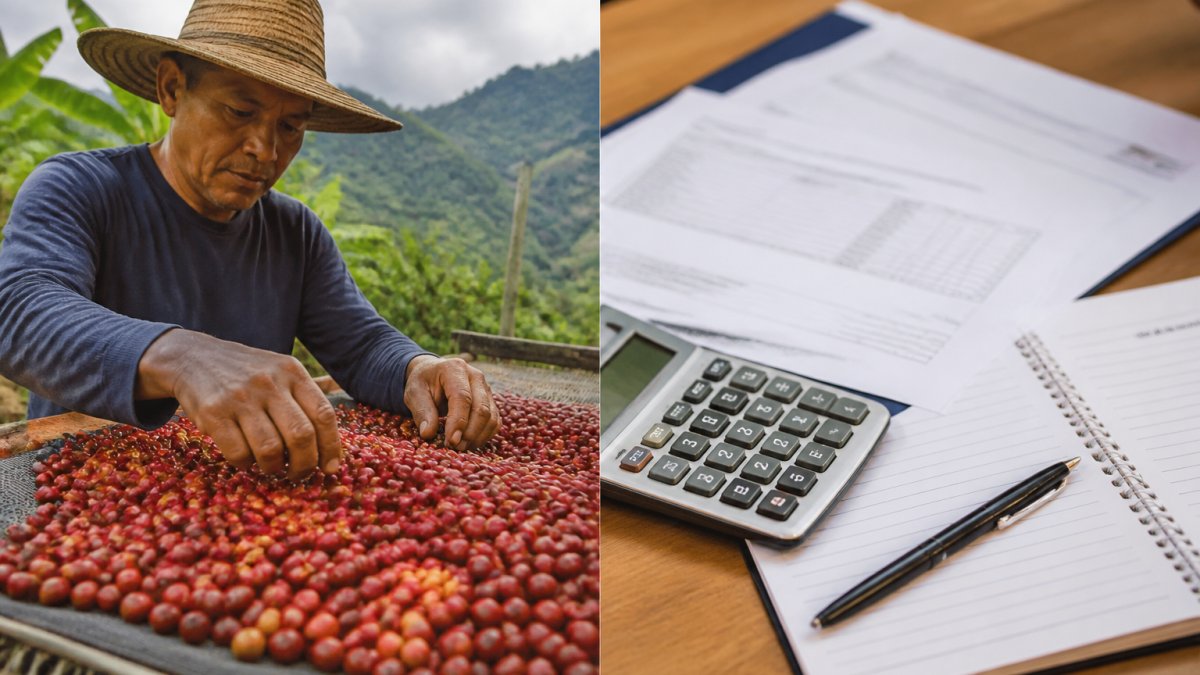
Green Coffee and Ingredient Prices
Green coffee is the raw, unroasted bean, and its price depends on origin, grade, and market volatility. A high-altitude, hand-sorted lot from a named farm costs more than a blended commodity lot because supply is limited and selection is stricter. When the coffee market swings, roasters buying premium lots feel it directly, since those lots are priced individually rather than at a flat commodity rate.
Labor Costs and Producer Compensation
Hand-picking ripe cherries is skilled work, and it happens more than once per harvest. Farms that pay workers fairly and reinvest in their land charge more for their coffee, and that premium is one of the clearest markers of quality. A common mistake is assuming all farm labor is cheap. Selective harvesting is slow, and slow work costs money. The practical consequence for a buyer is that a farm paying pickers a living wage cannot match the per-pound price of a farm that does not, which is one reason two coffees from the same region can differ sharply in price.
Transportation, Shipping, and Import Costs
Coffee crosses oceans before it reaches a roaster. Freight rates, insurance, customs clearance, and import handling all add to the landed cost of green coffee. These costs are volatile, and they hit small roasters harder than large importers because smaller volumes mean less negotiating power on shipping. A roaster buying a partial container pays a disproportionate share of the freight, and that difference shows up in the bag price even when the green coffee itself costs the same.
Roasting, Processing, and Quality Grading
Roasting is where weight disappears. Beans lose moisture and mass during the roast, so you pay for green coffee that will weigh less by the time it reaches the bag. Small-batch roasting also costs more per pound than industrial roasting, but it gives the roaster control over the flavor profile. Grading adds another layer: every defect removed is labor spent.
What the Stack Actually Looks Like
A useful way to read the chain is by what a roaster can and cannot control. Green coffee price, freight, and import handling are largely set by the market and by volume. Labor, processing, grading, roast batch size, and packaging are where a roaster makes choices that move the final price. That is why two roasters can buy similar green coffee and still land at different retail prices: the difference is usually in batch size, grading strictness, packaging, and how much of the green coffee cost they pass through versus absorb.
Single-Origin Coffee Price: Why One Farm Can Cost More Than a Blend
Single-origin coffee costs more than a blend because it comes from one specific farm or region, in limited quantity, with full traceability from harvest to bag. A blend can absorb a weak or cheap component by mixing it with others.
[Our Bali Blue is a good example](/products/bali-blue): smallholder farmers from Kintamani, wet-hulled and dried on raised beds, with a dark chocolate and molasses profile. Compare that to our Kenya, fully washed and dried on raised beds in Nyeri County, with bright acidity and citrus notes.


Coffee Processing Methods and How They Move the Price
Processing method changes both flavor and cost. Natural processing dries the whole cherry around the bean, which demands constant turning and careful monitoring on raised beds. Washed processing removes the fruit first, using more water and infrastructure.
Each method carries different risk. A washed process that goes right produces the clean, bright profile many drinkers prefer. [Our Ethiopia Natural is full natural and hand-sorted](/products/ethiopia-natural), which is why it tastes of milk chocolate, fruit, and caramel rather than a flat, generic sweetness.

| Processing Method | Labor Demand | Flavor Tendency | Cost Impact |
|---|---|---|---|
| Washed | High water and infrastructure | Clean, bright, acidic | Moderate to high |
| Natural | Constant monitoring on beds | Fruity, sweet, heavy body | High |
| Wet-hulled | Skilled, regional technique | Earthy, full body | Moderate |
| Barrel-aged | Long resting period | Spirits, oak, spice | High |
Premium Beans vs. Premium Café Drinks: Where Your Money Goes
A premium café drink and a premium bag of beans are not the same purchase, and the difference is easiest to see when you break each one into cost per cup. When you buy a latte at a café, most of what you pay covers rent, staff wages, equipment, and operating expenses, not the coffee itself. When you buy a bag, you pay for the beans, the roast, and the delivery, with no storefront overhead.
Cost Per Cup: Home-Brewed Premium vs. Café vs. Commodity
Start with a premium bag priced at $22.99 for 12 ounces. A typical home brewer uses about 0.6 to 0.7 ounces of coffee per 10-ounce cup, so a 12-ounce bag yields roughly 17 to 20 cups.
Now compare a café drink. A $5 latte includes the espresso, milk, cup, labor, rent, and equipment.
| Purchase | Typical Price | Cups per Purchase | Approx. Cost per Cup |
|---|---|---|---|
| Premium bag, home-brewed | $22.99 / 12 oz | ~18 | ~$1.30-$1.50 |
| Café latte | ~$5.00 | 1 | ~$5.00 |
| Commodity bag, home-brewed | Lower per pound | More cups | Lower per cup |
The table is not an argument that premium always wins on price.
What the Café Premium Actually Pays For
A café's price reflects location, staffing, equipment, and service. A high-rent corner shop with a full staff and a multi-group espresso machine carries costs that a home brewer never sees. That is why a café can charge $5 for a drink made with beans that cost less per pound than the bag on your shelf. The premium in the cup is largely a premium for convenience and setting, not for the bean.
What the Bag Premium Actually Pays For
A premium bag pays for the bean, the roast, the grading, and the traceability. It does not pay for a storefront, a barista, or a seat by the window. That is why the fair comparison is price per cup at home versus price per drink at a café, and why a premium bag can be the cheaper habit even at a higher sticker price.
Is Premium Coffee Worth It? A Framework for Deciding
Premium coffee is worth it when you drink it regularly, care about freshness, and want traceable origin. It is not worth it if you cannot taste the difference or brew it badly. Use this checklist to decide:
- Do you brew at home at least a few times a week?
- Can you taste the difference between a blend and a single origin?
- Does the roaster print a roast date?
If you check most of these boxes, a premium bag pays for itself. [Our Whiskey Barrel Aged is a good entry point](/products/whiskey-barrel-aged) for drinkers who want something distinctive without committing to a delicate single origin.
Frequently Asked Questions
What makes premium coffee more expensive than regular coffee?
Premium coffee costs more because every step from farm to bag carries higher costs. Specialty-grade Arabica beans are hand-picked, sorted, and graded for quality, which raises labor costs. Single-origin lots require separate harvesting and processing, and small harvests sell at a premium. Add higher green coffee prices, careful roasting in small batches, and traceable shipping, and the final bag costs more to produce. Regular coffee often blends lower-grade Robusta with Arabica and relies on high-volume, mechanized harvesting to keep prices down.
Is premium coffee worth the extra cost?
It depends on how much you value flavor and freshness. If you drink coffee daily and notice differences in sweetness, acidity, and aroma, premium beans can deliver a noticeably better cup for a few dollars more per serving. Brewed at home, a $22.99 bag of single-origin coffee like Johnny D's Brew Ethiopia Natural works out to roughly $1.40 per cup at 16 cups per bag, which is still well below most café drinks. If you mainly drink coffee for caffeine, a lower-cost option may suit you fine.
Does single-origin coffee cost more than a blend?
Generally yes. Single-origin coffee comes from one farm or region, so it is harvested and processed separately in smaller lots. That separation adds sorting, milling, and traceability costs. Blends can use beans from multiple sources, including lower-cost harvests, to balance flavor and price. A single-origin coffee price reflects the specific farm, altitude, variety, and processing method, which is why a 12 oz bag of Johnny D's Brew Kenya or Bali Blue is $22.99 while commodity blends often sell for less.
How do coffee processing methods affect the price?
Processing methods change both flavor and cost. Washed coffees require more water, fermentation tanks, and careful drying, which adds labor and infrastructure. Natural processed coffees, like Johnny D's Brew Ethiopia Natural, dry the whole cherry on raised beds for weeks, demanding frequent turning and sorting to prevent defects. Both methods produce distinct flavors, and the extra handling is one reason premium coffees cost more. Honey and anaerobic methods add further labor and risk, which can push prices higher still.
The challenge is simple: most coffee drinkers pay premium prices without knowing what they are actually buying. Johnny D's Brew roasts to order for maximum flavor and aroma, sources beans from trusted farms around the world, and ships free on all coffee and tea so your order arrives fresh and fast. Find your perfect roast and taste the difference transparency makes.