

Benefits of Buying Coffee Roasted to Order
Table of Contents
- What Roasted to Order Actually Means (and Why It Beats Fresh-Roasted)
- How Fresh Should Coffee Beans Be When Ordering Online?
- How Long to Wait After Coffee Is Roasted Before Brewing
- Roasted to Order vs. Store-Bought Coffee: Flavor, Cost, and Trade-Offs
- How to Store Fresh Coffee Beans So They Stay Fresh Longer
- How to Verify a Roast-to-Order Seller Before You Buy
- Conclusion: Is Roasted-to-Order Coffee Worth It?
- Frequently Asked Questions
Last Updated: October 5, 2026
What Roasted to Order Actually Means (and Why It Beats Fresh-Roasted)
Coffee roasted to order is coffee that a roaster roasts only after your order is placed, then ships it within days rather than weeks. That single change in timing protects the volatile compounds responsible for aroma and flavor. This guide from Johnny D's Brew explains what the benefits of buying coffee roasted to order look like in the cup, and where the trade-offs sit.
The distinction matters because "fresh-roasted" is a loose term. A bag can be roasted in small batches, sit in a warehouse, and still carry a fresh-sounding label. Roast-to-order closes that gap.
Roast-to-Order vs. Fresh-Roasted: The Difference in Plain Terms
Fresh-roasted coffee means the beans were roasted recently at some point before they reached you. Roast-to-order coffee means the roast date is tied directly to your purchase, so the roast-to-ship interval is measured in days, not months.
That is the whole difference, and it is the one most buyers never check.
How Fresh Should Coffee Beans Be When Ordering Online?
The best window for whole beans is roughly two to four weeks after the roast date, provided the bag is sealed and stored well. Ground coffee fades faster because more surface area meets oxygen.
So when you order online, the number that matters is not the "best-by" date. It is the roast date.
- Whole beans: peak flavor for about two to four weeks post-roast
- Ground coffee: best within about one to two weeks post-roast
- Grocery-store coffee: often weeks or months past roast before it hits the shelf
A Specialty Coffee Association resource on coffee freshness notes that freshness is one of the few quality signals a buyer can verify on the bag itself.
How Long to Wait After Coffee Is Roasted Before Brewing
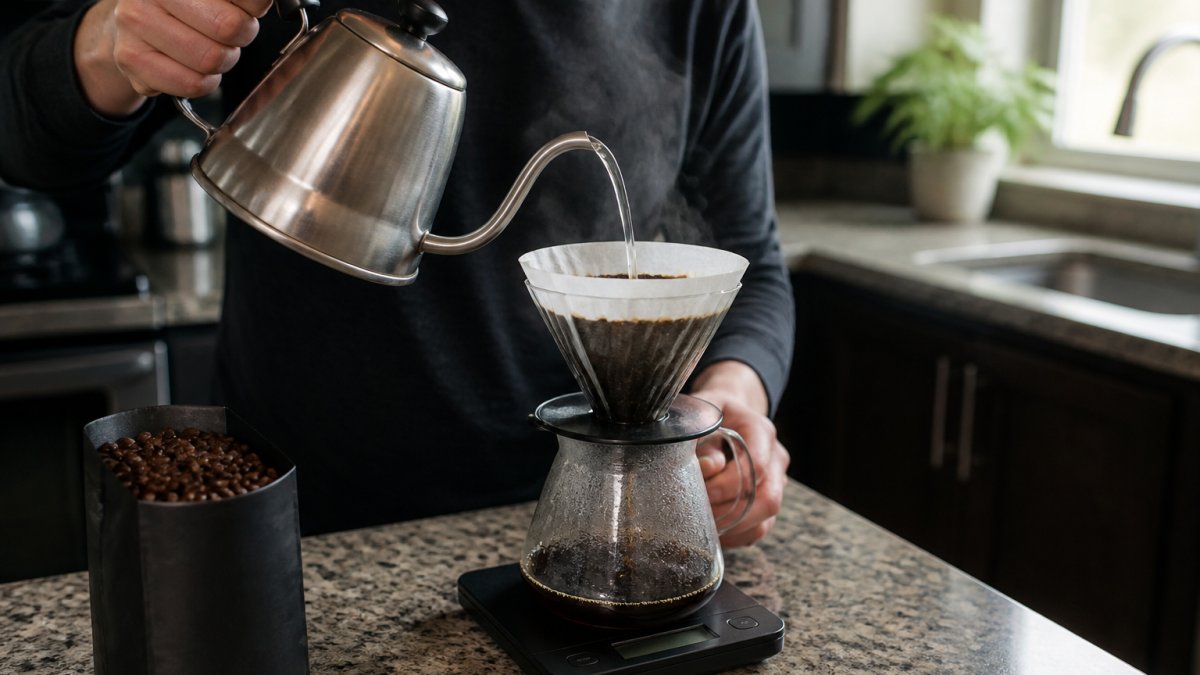
Wait about three to seven days after the roast date before brewing whole beans. This resting period lets carbon dioxide escape so water can extract flavor evenly.
Brew too soon and the degassing works against you. Carbon dioxide pushes water away from the grounds, which produces an uneven extraction and a flat, sometimes sour cup.
The wait time shifts with roast level:
| Roast Level | Rest Before Brewing | Why |
|---|---|---|
| Light roast | 7-10 days | Denser bean, slower degassing |
| Medium roast | 4-7 days | Balanced release of carbon dioxide |
| Dark roast | 2-4 days | Porous bean, faster degassing |
Roasted to Order vs. Store-Bought Coffee: Flavor, Cost, and Trade-Offs
Roast-to-order coffee wins on flavor and loses on convenience. Grocery-store coffee wins on price and speed, but you rarely know its roast date. The honest comparison is less about which is "better" and more about what you are optimizing for.
Here is the side-by-side:
| Factor | Roasted to Order | Store-Bought |
|---|---|---|
| Roast date visibility | Usually printed on the bag | Often absent or replaced by a best-by date |
| Typical age at purchase | Days after roast | Weeks to months after roast |
| Aroma and flavor profile | Fuller, more distinct | Flatter, muted |
| Cost per bag | Higher | Lower |
| Shipping time | A few days | Immediate |
| Minimum order | Sometimes one bag, sometimes a subscription | None |
| Waste risk | Low if you buy to your drinking pace | Higher, because large tins go stale before you finish |
The per-cup math, not the sticker price
A roast-to-order single origin typically costs more per bag than a supermarket tin, and that gap is real. But the sticker price is the wrong number to compare. What matters is cost per cup.
A standard dose for a drip or pour-over is about 1 to 2 tablespoons of ground coffee per 6 ounces of water, which works out to roughly 10 to 12 grams per cup. A 12-ounce bag holds about 340 grams, so it brews somewhere in the range of 28 to 34 cups depending on your dose and brew method. Divide the bag price by that cup count and the per-cup difference between roast-to-order and supermarket coffee is usually measured in cents, not dollars. If you drink one cup a day, that gap is smaller than the sticker price suggests.
Shipping changes the math. A single-bag order carries a shipping charge that can rival the bag itself, which is why most roast-to-order buyers either order multiple bags at once or use a subscription that spreads shipping across shipments. Subscriptions also tend to lock in a lower per-bag rate than one-off orders, and they solve the freshness problem by timing the roast to your delivery schedule.
The trade-offs you should actually weigh
- Shipping time. Roast-to-order coffee is not instant. Expect a few days for roasting and dispatch, plus transit. If you run out on a Sunday morning, you cannot fix that with a roast-to-order order.
- Delivery delays. Weather, carrier backups, and holiday volume can push a shipment past its expected window. A bag that was roasted to order can still arrive a week later than planned.
- Minimum orders. Some roasters sell single bags; others require a two-bag minimum or a subscription. Check before you commit.
- Availability. Small-lot single origins sell out. A roast-to-order model does not guarantee your favorite bean is in stock.
- Resting period. The coffee may need a few days after arrival before it hits peak flavor, so the first cup is not always the best cup.
- Waste. Buying to your actual drinking pace reduces the half-finished stale bag problem that plagues large supermarket tins.
How to Store Fresh Coffee Beans So They Stay Fresh Longer
Store whole beans in an airtight, opaque container at room temperature, away from light, heat, and moisture. Skip the fridge, and skip the freezer unless you are storing a large amount long term.
Oxygen exposure is the main enemy. Every time you open a bag, volatile compounds leave and stale air enters.
- Keep beans whole until brewing, then grind right before use
- Match grind size to your brewing method for even extraction
- Buy in amounts you will finish within a few weeks
- Reseal the bag tightly and press out excess air
How to Verify a Roast-to-Order Seller Before You Buy
Any roaster can print "fresh-roasted" on a bag. Verifying that a seller actually roasts to order takes a few specific checks. Use this checklist before you commit.
Roast date and dispatch timing
- Is a roast date printed on the bag, not just a best-by date?
- Does the listing state how quickly orders ship after roasting, ideally within one to three business days?
- Does the seller roast after the order is placed, or pull from pre-roasted stock?
- Is the roast-to-ship window stated in plain language, not buried in a shipping policy?
A seller who roasts to order will tell you when the coffee was roasted, not just when it shipped. If the roast date is missing or the dispatch window is vague, treat the "fresh-roasted" claim as marketing until proven otherwise.
Packaging and freshness protection
- Is the bag opaque or otherwise light-blocking?
Packaging is not cosmetic. A clear bag on a sunny shelf and a one-way valve bag in a dark cupboard will age at very different rates, even if both were roasted on the same day.
Sourcing and origin transparency
- Is the bean origin, region, and process named?
- Is the roast level specified?
- Is the grower, cooperative, or washing station identified where possible?
- Are altitude and variety listed for single origins?
- Does the seller describe how the coffee was sourced, not just where it came from?
At Johnny D's Brew, every bag is roasted to order, and our single origins list the grower, region, altitude, and process so you know exactly what you are buying. Our Ethiopia Natural, for example, comes from smallholder farmers in the Sidama zone with tasting notes of milk chocolate, fruity, and caramel.

Freshness guarantees and customer terms
- Are shipping terms and delivery timelines clear before checkout?
- Is there a stated policy for delayed or damaged shipments?
A quick scoring method
Count the boxes you can check. A seller who satisfies the roast-date, dispatch, packaging, and sourcing items is almost certainly roasting to order. A seller who satisfies only the origin and roast-level items may be selling recently roasted stock rather than roasting to your order, which is a different product at a different freshness point.
Conclusion: Is Roasted-to-Order Coffee Worth It?
Roasted-to-order coffee is worth it if you drink coffee daily and care about aroma and flavor. You pay more per bag and wait a few days for delivery, and in return you get a roast date you can trust and a cup that tastes like the bean was meant to taste.
If you want the convenience of a supermarket tin, that is a fair choice. If you want peak flavor, the roast date is the whole game.
Frequently Asked Questions
What are the benefits of buying coffee roasted to order?
Coffee roasted to order is roasted after you place your order, not weeks before it reaches a shelf. That means the beans arrive closer to their peak flavor window, so volatile compounds responsible for aroma and tasting notes have had less time to fade. You also get a visible roast date, fresher whole beans for grinding at home, and a cup that reflects the roaster's intended flavor profile rather than a stale version of it.
How long should you wait to drink freshly roasted coffee?
Most roasters suggest a resting period of 3 to 7 days after the roast date before brewing. During that time, carbon dioxide from roasting escapes in a process called degassing. Brew too soon and the gas can disrupt extraction, giving you an uneven or flat cup. Medium and dark roasts often settle faster, while light roasts may need closer to a week to hit peak flavor.
Is coffee roasted to order worth the extra cost?
It depends on how much you value freshness. A 12-ounce bag from a roast-to-order seller often runs $22 to $23, which is higher than many grocery-store options. What you get for that price is a recent roast date, whole beans with intact oils, and a flavor profile that has not degraded on a shelf. If you drink coffee daily and notice stale or flat flavors, the difference is usually easy to taste.
How do I know a seller actually roasts to order and not just claims to?
Look for a printed roast date on the bag, not just a best-by date. Ask how quickly orders ship after roasting, since a roast-to-ship interval of 1 to 3 days is a good sign. Check whether the seller lists specific origins, altitudes, and processing methods, which suggests they are working closely with suppliers. A seller that cannot tell you when your beans were roasted is probably not roasting to order.
Finding coffee that is genuinely fresh, not just labeled that way, takes a seller who roasts after you order and tells you the date. Johnny D's Brew roasts every bag to order, sources beans from trusted farms worldwide, and ships coffee and tea free. Our lineup spans single origins like Colombia and Ethiopia Natural, plus the Whiskey Barrel Aged blend aged 30 days in a bourbon barrel. Find your perfect roast and taste the difference a real roast date makes.