

Best Jasmine Green Tea Online: A Buyer's Guide
Table of Contents
- What Makes Quality Jasmine Green Tea Stand Out
- Organic Jasmine Green Tea: Sourcing and Certification
- Loose-Leaf Jasmine Green Tea vs. Tea Bags: What's the Difference
- How to Brew Jasmine Green Tea for Maximum Flavor
- Jasmine Green Tea Caffeine Content and Best Times to Drink
- How to Evaluate Freshness, Price, and Value Online
- Conclusion: Finding Your Ideal Jasmine Green Tea
- Frequently Asked Questions
Last Updated: October 7, 2026
What Makes Quality Jasmine Green Tea Stand Out
When you're shopping for jasmine green tea online, you're not just buying dried leaves. You're choosing between vastly different flavor experiences, sourcing practices, and brewing outcomes. The difference between a disappointing cup and an exceptional one comes down to three factors: the tea base itself, how the jasmine scenting happens, and the physical form the tea takes when it arrives at your door.
At Johnny D's Brew, we understand what separates mediocre jasmine from the kind that makes you pause mid-sip. The foundation starts with understanding what you're actually evaluating.

Tea Base and Origin
The green tea foundation matters more than most people realize. Chinese green teas, particularly those from regions like Anhui, Zhejiang, and Fujian, form the backbone of quality jasmine green tea. These origins produce a delicate, slightly grassy base that doesn't overpower the floral notes.
When evaluating jasmine green tea online, check whether the seller discloses the origin. Vague descriptions like "premium blend" or "imported green tea" are red flags. Reputable sources specify the province or region, the harvest season, and sometimes even the specific estate.
The hand-picked designation matters too. Hand-picked leaves indicate selective harvesting of younger, more tender growth, which translates to smoother, less astringent brews. Machine-harvested teas cost less but often include stems and larger leaf fragments that produce harsher flavor.
Jasmine Scenting Process and Intensity
Here's where many online descriptions fall short: they don't explain how the jasmine actually gets into the tea. The scenting process determines everything about the final product's aroma and flavor intensity.
Traditional jasmine scenting involves layering fresh jasmine blossoms with dried green tea leaves. The blossoms infuse their fragrance into the leaves over several hours or days, then are removed. The number of scenting rounds, how many times this layering-and-infusing cycle repeats, directly affects intensity. A single round produces subtle, delicate jasmine notes.
When shopping for jasmine green tea online, look for sellers who mention scenting rounds explicitly. If they don't, assume it's a single round or possibly a jasmine flavoring oil rather than actual blossoms.
Leaf Style: Pearls, Loose-Leaf, and Tea Bags
The physical form you receive affects both brewing control and freshness. Jasmine pearls, hand-rolled or machine-rolled balls of compressed jasmine green tea, are visually striking and brew beautifully as they unfurl in hot water. They're also denser, which can slow oxidation and preserve freshness longer during storage.
Loose-leaf jasmine green tea offers maximum flexibility for brewing strength and timing. You control the leaf-to-water ratio completely, making it easier to dial in your preferred intensity. Loose leaves also cool more quickly after steeping, reducing the risk of over-extraction.
Tea bags offer convenience but sacrifice control and often quality. Most jasmine green tea bags use fannings, the dust and broken fragments left after processing whole leaves, rather than full leaves. These brew faster but produce a flatter, more astringent cup.
Organic Jasmine Green Tea: Sourcing and Certification
If you prioritize organic jasmine green tea, verify the certification before purchasing. USDA Organic certification confirms that the tea was grown without synthetic pesticides, herbicides, or fertilizers, and that the processing facility meets organic handling standards. Look for the USDA Organic seal on the packaging or product listing.
The certification matters because jasmine tea involves two plants, the green tea base and the jasmine blossoms, both of which must be organically grown and handled. Some sellers claim "organic" without certification, which is a marketing claim rather than a verified standard.
Chinese organic jasmine teas from regions like Zhejiang often carry organic certification from both USDA and Chinese authorities. This dual certification provides extra assurance, though USDA Organic is the standard that matters most for online shoppers in this market.
Loose-Leaf Jasmine Green Tea vs. Tea Bags: What's the Difference
The choice between loose-leaf jasmine green tea and tea bags isn't just about convenience, it fundamentally changes your brewing experience. Loose-leaf tea gives you control over steeping time, water temperature, and leaf-to-water ratio.
Tea bags prioritize speed and simplicity. You drop a bag in hot water, wait, and remove it. No measuring, no cleanup beyond the bag itself.
For daily drinking, loose-leaf jasmine green tea delivers noticeably better aroma and flavor complexity. The full leaves unfurl completely, releasing their full spectrum of taste compounds. For travel or office brewing where you can't access a proper infuser, bags make sense, they're portable and require no equipment beyond a mug.
How to Brew Jasmine Green Tea for Maximum Flavor
Brewing jasmine green tea correctly transforms a mediocre product into something memorable. The tea is delicate, too much heat or too long steeping and you'll extract bitterness instead of floral sweetness. Too little heat or too short steeping and you'll miss the full flavor.
Water Temperature and Steeping Time
Green tea brews best at 160-180°F, significantly cooler than black tea or coffee water. If you don't have a thermometer, let boiling water cool for 3-5 minutes before pouring. The exact temperature depends on the tea's origin and processing style: lighter, more delicate jasmine greens prefer the lower end (160°F), while slightly more strong versions tolerate 180°F.
Steeping time for jasmine green tea typically ranges from 2-4 minutes for the first infusion. Start at 2 minutes, taste it, and adjust upward if you want more flavor intensity. Most people find 3 minutes hits the sweet spot, enough time for the jasmine aroma to fully emerge without extracting harsh tannins from the leaves.
Multiple Infusions and Re-Steeping
One of jasmine green tea's greatest advantages is its ability to produce multiple quality infusions from the same leaves. After your first steep, remove the leaves from the water completely (don't leave them sitting), then re-steep using the same leaves. Second infusions often require only 1-2 minutes because the leaves have already begun opening. Third and sometimes fourth infusions are possible, though flavor diminishes with each round.
This re-steeping capability makes loose-leaf jasmine green tea economical. You're getting three to four cups of tea from a single serving of leaves, which spreads the cost across multiple brewings. The flavor profile also evolves subtly across infusions, the first is often the most floral, the second more balanced, and the third more delicate and vegetal.
Common Brewing Mistakes to Avoid
The most frequent mistake is using water that's too hot. Boiling water scorches jasmine green tea, producing a bitter, astringent cup that masks the floral notes entirely. If you only have access to boiling water, wait before pouring, this single adjustment improves results dramatically.
Leaving leaves in contact with water between sips is another common error. If you're not doing multiple infusions, remove the leaves completely after steeping. Continuous contact over-extracts the tea, turning it unpleasantly bitter.
Using too much leaf is less common but still happens. A standard ratio is one teaspoon of loose-leaf jasmine green tea per 8 ounces of water. This produces a balanced, flavorful cup. Using more doesn't necessarily improve the result, it just makes the tea more intense and potentially astringent.
Jasmine Green Tea Caffeine Content and Best Times to Drink
Jasmine green tea contains less caffeine than black tea or coffee, typically 25-50mg per 8-ounce cup depending on steeping time and leaf quantity. This moderate caffeine content makes it suitable for afternoon drinking without significantly disrupting evening sleep for most people.
The best time to drink jasmine green tea is mid-morning through early afternoon. The caffeine provides a gentle energy lift without the jolt of coffee, and the floral notes offer a calming effect that balances the stimulation.
For evening drinking, brew for the minimum time (2 minutes) to minimize caffeine, or switch to a decaffeinated jasmine green tea if you want the flavor without stimulation. The ritual of brewing and sipping warm tea in the evening can be relaxing regardless of caffeine content.
How to Evaluate Freshness, Price, and Value Online
Freshness is the single most important quality factor for jasmine green tea online, yet it's the hardest to assess without tasting. Green tea degrades faster than black tea because the leaves haven't been oxidized, they're more delicate and prone to flavor loss over time. Look for these freshness indicators when shopping:
Packaging opacity: Jasmine green tea should be stored in opaque or dark packaging to prevent light degradation. Clear bags expose the tea to light damage, which accelerates flavor loss.
Roast or processing date: Reputable sellers include a roast date or packaging date on the label. Tea roasted within the last 3-4 months is ideal. Beyond 6 months, quality noticeably declines.
Aroma assessment: If the seller provides sample descriptions or images, quality jasmine green tea should smell fresh and distinctly floral, not musty, stale, or overly perfumed.
Price reality: Jasmine green tea online typically ranges from $8-25 per ounce depending on origin, organic certification, and leaf quality.
Calculating price per serving helps with value comparison. If a 2-ounce package costs $15 and yields 8-10 cups (accounting for multiple infusions), that's roughly $1.50-2 per cup.
Value beyond price: The cheapest jasmine green tea online isn't necessarily poor value if it delivers acceptable flavor. But if you're investing in premium jasmine green tea, you're paying for:
- Hand-picked leaves rather than machine-harvested
- Actual jasmine blossoms rather than flavoring oils
- Careful storage and rapid shipping to preserve freshness
- Clear sourcing transparency and origin information
These factors compound.
Conclusion: Finding Your Ideal Jasmine Green Tea
The best jasmine green tea online balances three elements: a delicate green tea base from a known origin, proper jasmine scenting using real blossoms, and packaging that preserves freshness. Loose-leaf format gives you maximum control over brewing, while organic certification provides sourcing transparency if that matters to you.
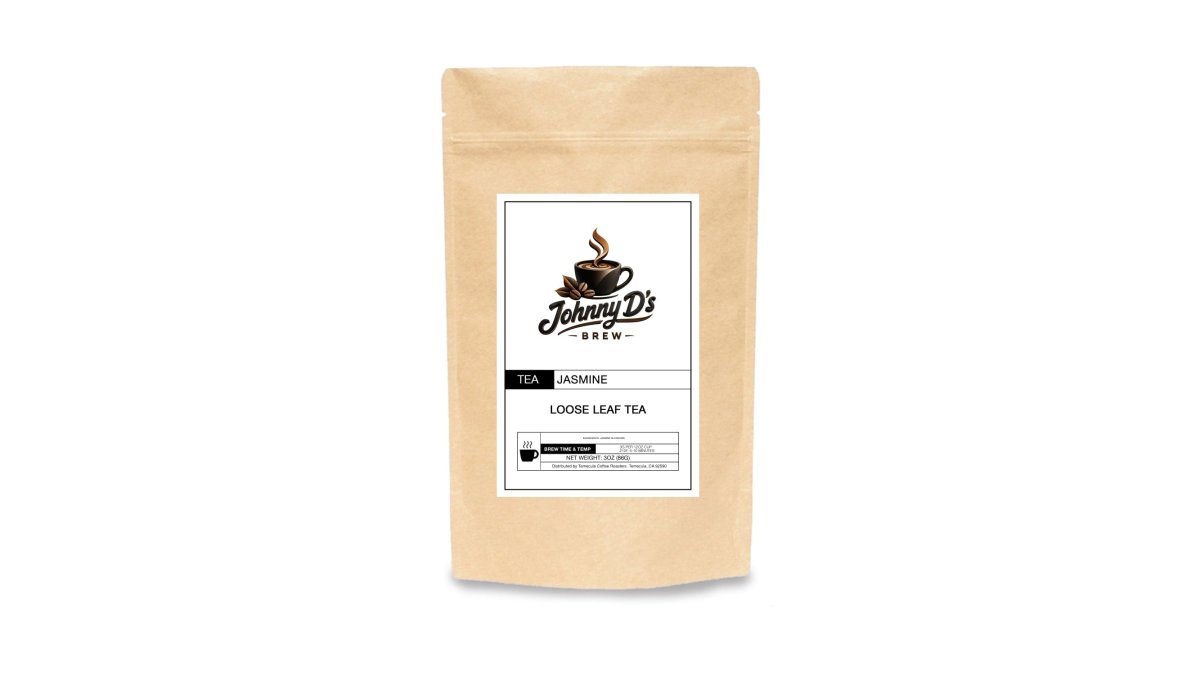
At Johnny D's Brew, we've selected jasmine green tea that meets these standards. Our Jasmine combines hand-picked green tea leaves with fresh jasmine blossoms through traditional scenting, delivering the smooth, silky cup that defines quality jasmine green tea. At $20.99, it reflects the care we take in sourcing and handling.
Frequently Asked Questions
What's the difference between jasmine green tea and regular green tea?
Jasmine green tea combines a green tea base with fresh jasmine blossoms or jasmine scenting applied during processing. The jasmine adds a floral aroma and sweet flavor profile, while the green tea provides the base. Regular green tea has no jasmine scenting. Both contain similar caffeine levels, but jasmine green tea offers a more delicate, aromatic experience suited for those seeking a smoother, less grassy taste than plain green tea.
Is loose-leaf jasmine green tea better than tea bags?
Loose-leaf jasmine green tea typically offers better flavor and allows multiple infusions, since whole leaves unfurl fully and release flavor gradually. Tea bags contain broken leaf particles that steep faster but often produce a weaker second or third infusion. For online shopping, loose-leaf options give you more control over steeping time and often represent better value per serving, though tea bags offer convenience. Quality matters more than format, so choose based on your brewing preference and how you plan to enjoy it.
How much caffeine does jasmine green tea have?
Jasmine green tea contains approximately 25-50 mg of caffeine per 8-ounce cup, depending on steeping time and leaf quality. This is less than black tea (40-70 mg) but more than herbal infusions. Longer steeping times extract more caffeine. Jasmine green tea provides a gentle caffeine boost without the jitters some experience with coffee, making it suitable for afternoon or evening consumption without disrupting sleep.
What should I look for when buying jasmine green tea online?
Look for organic certification (USDA Organic), hand-picked or full-leaf descriptions, and transparent sourcing information about the tea origin. Verify the roast or processing date to ensure freshness, and choose loose-leaf format if you plan multiple infusions. Consider price per serving rather than per bag, and check shipping policies to ensure fast, reliable delivery. Reputable online sellers provide brewing instructions and describe the floral aroma and flavor profile clearly.
Finding your ideal jasmine green tea online doesn't require extensive testing. Focus on origin transparency, real jasmine scenting, and freshness indicators, these three factors predict flavor quality better than price alone. Johnny D's Brew's Jasmine green tea combines all three, offering a reliable choice for anyone seeking genuine floral complexity and smooth, balanced flavor. Order today and experience the difference that proper sourcing and careful scenting make in every cup.