

How to Brew Jasmine Green Tea: A Step-by-Step Guide
Table of Contents
- How to Brew Jasmine Green Tea: The Basics That Decide the Cup
- Jasmine Tea Water Temperature: Why 175°F Beats Boiling
- How Much Jasmine Tea Per Cup: Ratios That Scale
- Jasmine Green Tea Steeping Time and Avoiding Bitterness
- Step-by-Step Hot Brewing Instructions
- How to Cold Brew Jasmine Tea
- Troubleshooting Jasmine Green Tea by Cause
- Conclusion
- Frequently Asked Questions
Last Updated: October 15, 2026
How to Brew Jasmine Green Tea: The Basics That Decide the Cup
Most bad cups of jasmine green tea come down to two mistakes: water that's too hot and steeping that runs too long.
Here's the short version: water around 175°F, about 1 teaspoon of tea per 8 ounces of water, steep 2 to 3 minutes.
Jasmine green tea is a scented tea made by layering green tea leaves with fresh jasmine blossoms so the leaves absorb the flower's aroma.

What You'll Need Before You Start
You don't need much equipment, but a few tools make a real difference:
- Loose-leaf jasmine tea or tea pearls (pearls are hand-rolled and unfurl slowly)
- A teapot or a simple cup
- A tea strainer if you're not using a teapot with a built-in filter
A kitchen scale beats a spoon for consistency: tea leaves vary in size, so a teaspoon of fine leaves weighs more than a teaspoon of large ones.
Jasmine Tea Water Temperature: Why 175°F Beats Boiling
The right jasmine tea water temperature is 175°F, or between 170°F and 180°F.
This is the single biggest factor in how your cup tastes: boiling water extracts harsh tannins fast, burying the jasmine aroma under bitterness.
Black tea and most herbal blends handle a full boil; jasmine green tea cannot. A 175°F pour versus a 212°F pour is the difference between a smooth, fragrant cup and a sharp, astringent one.
How to Hit the Right Temperature Without a Thermometer
No thermometer? Here's a simple method:
- Bring water to a full boil.
- Pour it into your teapot or a separate cup.
- Wait 2 to 3 minutes. The water drops to roughly 170°F to 180°F.
- Pour it over your tea leaves.
Another trick: pour the hot water back and forth between two cups. Each transfer cools it a bit, and after 3 or 4 pours you're usually in range.
If your kettle has temperature settings, set it to 175°F and skip the guesswork.
How Much Jasmine Tea Per Cup: Ratios That Scale
The standard ratio is about 1 teaspoon of loose jasmine tea per 8 ounces of water, or roughly 2 to 3 grams if you're weighing. Tea pearls are denser, so use a slightly smaller scoop.
Here's how that scales for different serving sizes:
| Serving Size | Water | Loose Tea | Tea Pearls |
|---|---|---|---|
| 1 cup | 8 oz | 1 tsp | ¾ tsp |
| 2 cups | 16 oz | 2 tsp | 1½ tsp |
| 4 cups | 32 oz | 4 tsp | 3 tsp |
| 6 cups | 48 oz | 6 tsp | 4½ tsp |
A few things to keep in mind:
- More leaf means more flavor, not more bitterness, as long as your water isn't too hot.
- Less leaf with a longer steep is the fastest way to a bitter cup.
- Whole-leaf tea and tea pearls expand as they steep, so give them room in the pot.
If your tea tastes weak, add more leaf. If it tastes bitter, lower your water temperature or shorten the steep, never fix a weak cup by steeping longer.
Jasmine Green Tea Steeping Time and Avoiding Bitterness
Jasmine green tea steeping time should be 2 to 3 minutes for the first steep, adding 30 seconds to each additional steep.
Bitterness comes from three things: water that's too hot, steeping that runs too long, or too much leaf in too little water.
A good rule: taste at the 2-minute mark. If it's where you want it, strain it.
Whole-leaf tea and tea pearls hold up to a second and third steep well.
Step-by-Step Hot Brewing Instructions
Here's the full process, start to finish, about 6 minutes, mostly waiting for water to cool.
Total Time: 6 minutes Difficulty: Beginner
- Heat your water. Bring it to a boil, then let it cool to 175°F. Use a thermometer or the 2-to-3-minute wait method above. [Time: 3 minutes]
- Warm your teapot. Pour in a little hot water, swirl it, and dump it out. This keeps your brewing temperature steady.
- Measure your tea. Add 1 teaspoon of loose jasmine tea per 8 ounces of water, or ¾ teaspoon of tea pearls.
- Pour the water over the leaves. Pour gently and let the leaves settle. Don't stir aggressively, which bruises the leaves.
- Steep for 2 to 3 minutes. Watch the color deepen to a pale gold-green. Taste at 2 minutes. [Time: 2 to 3 minutes]
- Strain and serve. Pour off all the tea, or lift out your basket. Leave the leaves in the pot for a second steep if you like.
- Steep again if you want. Add 30 seconds to your next steep. This tea handles multiple infusions well.
Expected Result: A pale gold-green cup with a soft floral aroma and a smooth, sweet finish. No sharp edge, no lingering bitterness.
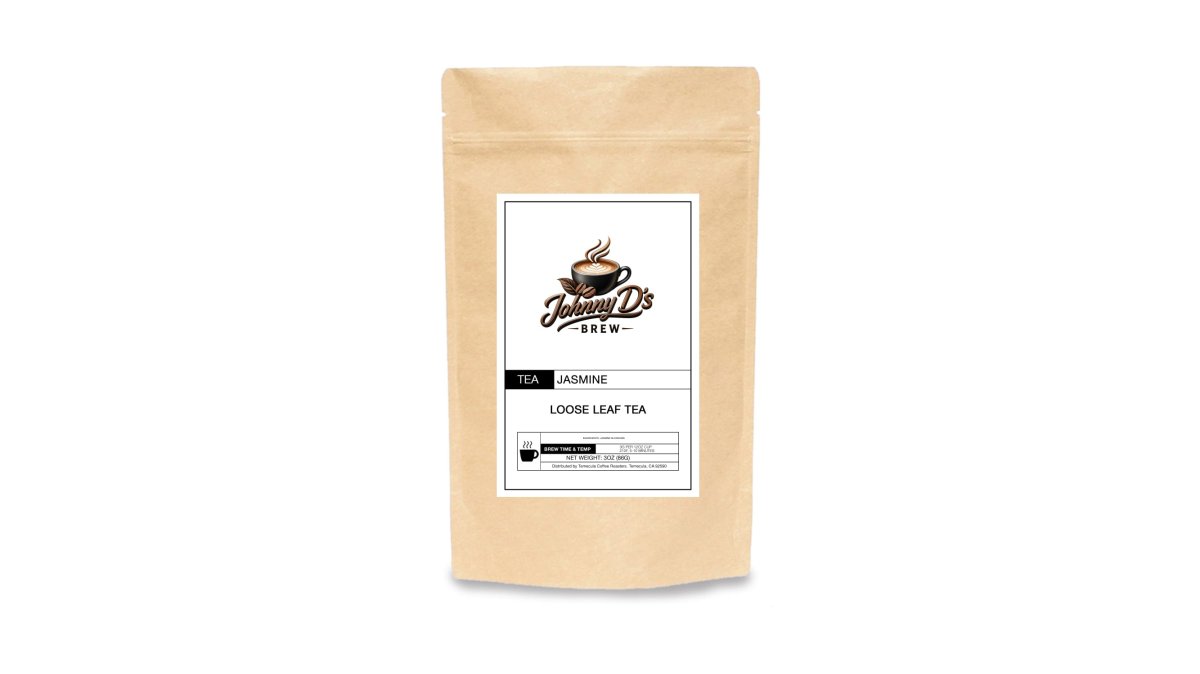
For a consistently fresh cup, start with quality leaves. Our Jasmine blends hand-picked green tea with fresh jasmine blossoms, and it's built to hold up across multiple steepings.
How to Cold Brew Jasmine Tea
Cold brewing trades speed for smoothness. Cold water and time replace heat, giving a rounder, less bitter cup with no risk of scalding the leaves.
Here's the base method, scaled for different batch sizes:
| Batch | Cold, Filtered Water | Loose Jasmine Tea | Tea Pearls | Refrigerate |
|---|---|---|---|---|
| 1 glass | 8 oz | 1 tsp (2-3 g) | ¾ tsp | 4-6 hours |
| 1 small pitcher | 32 oz | 4 tsp (10-12 g) | 3 tsp | 5-7 hours |
| 1 large pitcher | 64 oz | 8 tsp (20-24 g) | 6 tsp | 6-8 hours |
Steps:
- Add the tea to a sealed jar or pitcher. Loose leaves and pearls both work; pearls need the longer end of the range because they unfurl slowly in cold water.
- Pour cold, filtered water over the leaves. Tap water with heavy chlorine or minerals flattens the floral notes, so filter it if you can.
- Seal and refrigerate, cold is what keeps the extraction gentle.
- Taste at the low end of the range. If it's too light, give it another hour; cold brew is forgiving before it turns bitter.
- Strain the leaves out completely, or lift out your basket. Once the leaves stay in the liquid, the tea keeps getting stronger.
- Serve over ice, or refrigerate the strained tea and drink it within 2 to 3 days.
A few things that change the result:
- Tea bags cold-brew faster than loose leaf because the leaves are already broken up. Start tasting at 3 hours.
- Tea pearls need the full 6 to 8 hours and give the clearest, sweetest cold cup. They also hold up to a second cold steep if you add fresh water.
- Loose whole-leaf jasmine sits in the middle, 4 to 6 hours is usually right.
Here's how the two methods compare side by side:
| Factor | Hot Brew | Cold Brew |
|---|---|---|
| Time | 2 to 3 minutes | 4 to 8 hours |
| Water temp | 175°F | Cold |
| Flavor | Brighter, more aromatic | Smoother, softer, less astringent |
| Bitterness risk | Higher | Very low |
| Aroma intensity | Stronger | Muted but cleaner |
| Best for | A quick daily cup | Make-ahead batches, iced tea, warm-weather drinking |
| Shelf life once strained | Best drunk same day | 2 to 3 days refrigerated |
Cold brew suits a pitcher you'll drink through the day, iced tea you want to pour over ice without diluting, or anyone who finds hot-brewed green tea too sharp. For the full floral punch, hot brewing still wins, cold water pulls less aroma out of the leaf.
Troubleshooting Jasmine Green Tea by Cause
Most problems trace back to four causes: water temperature, steep time, leaf quantity, or leaf quality. Work through them in that order, temperature and time ruin the most cups, and they're the easiest to fix on the next pour.
| Problem | Likely Cause | Fix |
|---|---|---|
| Bitter, astringent | Water too hot | Cool to 175°F before pouring |
| Bitter, astringent | Steeped too long | Strain at 2 to 3 minutes |
| Bitter, astringent | Too much leaf in too little water | Cut back to 1 tsp per 8 oz |
| Weak, watery | Too little leaf | Add more tea, not more time |
| Weak, watery | Stale leaves | Store sealed, away from light and heat |
| Flat, no aroma | Old tea | Buy smaller amounts more often |
| Flat, no aroma | Tap water with chlorine or heavy minerals | Switch to filtered water |
| Harsh aftertaste | Tap water | Use filtered water |
| Second cup tastes bad | Leaves left sitting in the water | Strain the full pot, or lift out the basket |
| Muted aroma even when fresh | Water too hot, or tea stored near coffee/spices | Lower the temperature; store tea separately |
Here's what's happening behind each fault:
- Bitterness is an extraction problem, not a tea problem. Green tea leaves release bitter compounds faster as temperature rises. At 212°F extraction runs away in seconds; at 175°F you have a 2-to-3-minute window to taste and pull the leaves. If your cup is bitter, drop the temperature first, then shorten the steep.
- Weakness is a leaf-quantity problem. Steeping longer just trades weak for bitter, because the compounds that add body also add astringency. Add leaf instead; if more leaf still tastes flat, the tea is old.
- Flat aroma is usually freshness or water. Jasmine aroma is volatile, it fades with air, light, and heat, and gets absorbed by whatever is stored next to the tea. Keep it sealed and away from coffee and spices. Chlorinated or heavily mineralized water also mutes the floral notes, so filtered water is worth the swap.
Adjustments by tea style:
- Tea pearls are dense and unfurl slowly, so they tolerate the full 3 minutes on the first steep and often taste better on the second. If pearls taste weak, give them another 30 seconds rather than adding more.
- Loose whole-leaf jasmine is the most forgiving. Start at 2 minutes and adjust.
- Tea bags use broken leaves that extract fast. Cut the first steep to 1½ to 2 minutes, and expect a weaker second steep.
Conclusion
Brewing jasmine green tea well isn't complicated, but it's unforgiving of two things: water that's too hot and steeps that run too long.
The leaves matter as much as the method. At Johnny D's Brew, we source tea with the same care we put into our coffee and ship it free so it arrives fresh.
Find your perfect roast, or your perfect cup of tea, at Johnny D's Brew.
Frequently Asked Questions
What temperature should water be for jasmine green tea?
Use water between 170°F and 180°F, with 175°F being the sweet spot for most jasmine green teas. Boiling water scorches the green tea leaves and pulls out harsh tannins, which is why so many people think jasmine tea tastes bitter. If you do not have a thermometer, boil water and let it sit for about 3 to 4 minutes before pouring. For cold brew, use cold water and refrigerate for 5 hours or overnight.
How much jasmine tea should I use per cup of water?
Use about 2 grams of loose-leaf jasmine tea, roughly 1 heaping teaspoon, for every 8 fluid ounces of water. For a standard 16-ounce mug, double that to 2 teaspoons. If you are brewing tea pearls or tightly rolled whole-leaf tea, use slightly less since the leaves expand more. A kitchen scale gives the most consistent results: 2 grams per cup for a lighter cup, 3 grams for a stronger one.
How long should you steep jasmine green tea?
Steep jasmine green tea for 2 to 3 minutes for the first infusion. Start tasting at the 2-minute mark. If you want a stronger cup, add 30 seconds rather than doubling the leaf amount, since over-steeping is the fastest route to bitterness. This jasmine tea is good for multiple steepings, so a second infusion at 3 minutes and a third at 4 minutes will still give you flavor without turning harsh.
Can you make cold-brew jasmine green tea?
Yes. Add 2 teaspoons of loose-leaf jasmine tea per 8 ounces of cold water in a sealed container, then refrigerate for 5 hours or overnight. Strain the leaves out and serve over ice. Cold brew extracts slower and never gets bitter, so it is a forgiving method if hot brewing has not worked for you. You can also brew it hot, cool it in the refrigerator, and pour it over ice the same day.