

Why Your Coffee Tastes Bitter: 7 Fixes
Table of Contents
- Why Your Coffee Tastes Bitter: The Main Culprits
- Coffee Grind Size Chart for Beginners
- Ideal Water Temperature for Coffee Brewing
- Over-Extraction: The Silent Bitterness Killer
- How to Clean Coffee Maker to Remove Bitter Taste
- Coffee Bean Quality and Roast Level
- Bitter vs. Sour: Know the Difference
- Your Action Plan to Fix Bitter Coffee
- Frequently Asked Questions
Last Updated: September 27, 2026
Why Your Coffee Tastes Bitter: The Main Culprits
Bitter coffee isn't a mystery. It's a message. Your brewing method is extracting too much from the grounds, pulling out harsh compounds that shouldn't make it into your cup.
The culprit is usually one of four things: grind size, water temperature, brew time, or equipment cleanliness. Sometimes it's a combination. The good news? Once you understand what causes bitterness, fixing it takes minutes, not days.
Over-extraction happens when hot water stays in contact with coffee grounds too long or the grounds are too fine. Water dissolves more than just the good flavors, it also pulls out tannins and other harsh compounds that create that unpleasant aftertaste. Think of it like steeping tea. Leave a tea bag in hot water for 30 seconds and it tastes smooth. Leave it for five minutes and it becomes astringent and undrinkable.
The difference between a smooth, rich cup and a bitter one often comes down to understanding how grind size, water temperature, and brew time work together. Get these three right, and your coffee will taste dramatically better.
Coffee Grind Size Chart for Beginners
Fine Grind vs. Coarse Grind: What Matters
Grind size controls how fast water moves through coffee grounds. Fine grind particles create more surface area for water to touch, speeding up extraction. Coarse grind particles are larger, so water moves through them faster without extracting as much.
Here's the practical difference: if your coffee tastes bitter, your grind is probably too fine. If it tastes sour or weak, it's probably too coarse.
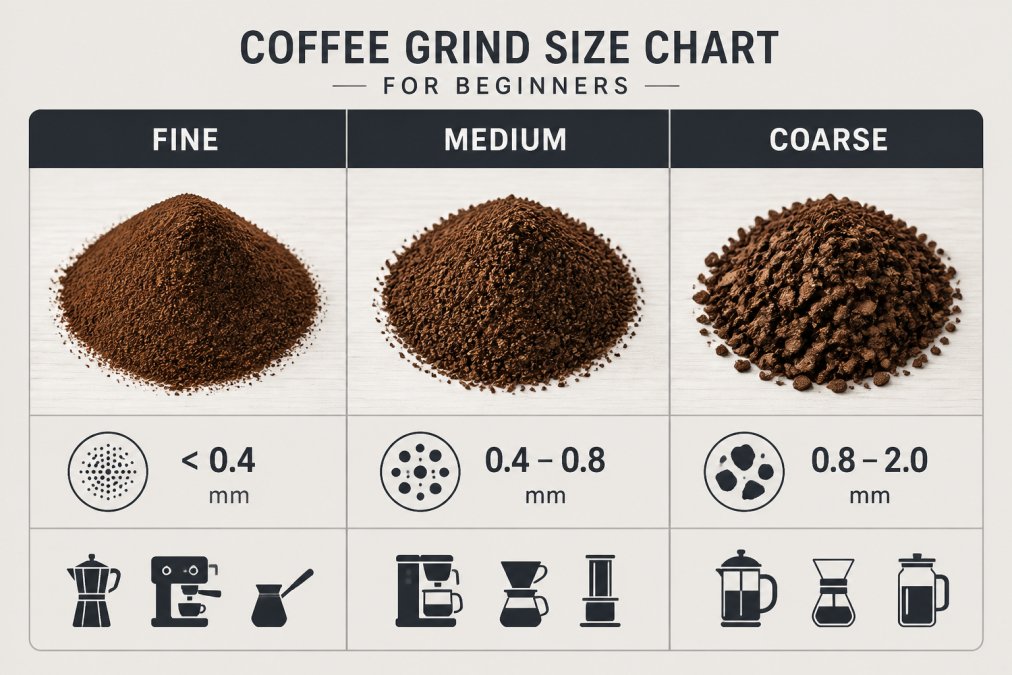
Fine grind looks like flour or powdered sugar. It's used for espresso and Moka pots. Water moves through it slowly, giving more time for extraction.
Medium grind looks like sand. It's used for drip coffee makers and pour-overs. It's the sweet spot for most home brewers.
Coarse grind looks like breadcrumbs or pebbles. It's used for French presses and cold brew. Water moves through quickly, so you need longer brew times to extract enough flavor.
Matching Grind to Your Brewing Method
Different brewing methods need different grind sizes because they control water contact time differently.
- Espresso machines: Fine grind. Water is forced through under pressure for 25-30 seconds.
- Drip coffee makers: Medium grind. Water drips through for 4-6 minutes.
- Pour-over (Chemex, Hario V60): Medium grind. You control the pour speed manually.
- French press: Coarse grind. Grounds sit in hot water for 4 minutes.
- Cold brew: Coarse grind. Grounds steep in cold water for 12-24 hours.
Using the wrong grind size is one of the fastest ways to end up with bitter coffee. A fine grind in a French press will over-extract because the grounds sit in hot water too long. A coarse grind in an espresso machine won't extract enough because the water moves through too fast.
Ideal Water Temperature for Coffee Brewing
Water temperature is non-negotiable. Too hot and you over-extract, pulling out bitter compounds. Too cool and you under-extract, leaving your coffee weak and sour.
The ideal range is 195-205°F. Most coffee experts recommend 200°F as the sweet spot.
Here's why: at 200°F, water dissolves the right compounds from the grounds, the sugars, acids, and oils that create flavor. Below 195°F, extraction slows down and you miss those flavors. Above 205°F, extraction speeds up and you pull out too many harsh compounds, including tannins that create bitterness.
If you're using a kettle without a thermometer, let boiling water cool for 30 seconds before pouring. Boiling water is around 212°F, so a brief cool-down gets you close to the ideal range.
Water quality matters too. Hard water (high mineral content) and soft water (low mineral content) extract differently. Hard water extracts faster because minerals in the water interact with coffee compounds. Soft water extracts slower. If your tap water is very hard or very soft, consider using filtered water for more consistent results.
Over-Extraction: The Silent Bitterness Killer
Over-extraction is the most common cause of bitter coffee. It happens when water pulls too many solids from the grounds, including compounds that taste bad.

Think of extraction like making tea. A short steep gives you smooth flavor. A long steep gives you bitterness. Coffee works the same way.
Total Dissolved Solids (TDS) is how coffee experts measure extraction. It's the percentage of dissolved coffee particles in your cup. The ideal range is 1.35-1.45%. Below that, coffee tastes weak. Above that, it tastes bitter.
You can measure TDS with a refractometer (a small device that costs around $30-50), but most home brewers don't need to. Instead, use your taste buds. If your coffee tastes harsh or has a lingering unpleasant aftertaste, you're over-extracting.
Brewing Time and Coffee-to-Water Ratio
Brewing time and coffee-to-water ratio work together to control extraction. Change one and you change how much flavor ends up in your cup.
The Golden Ratio is 1:16 (coffee to water by weight). This means 1 gram of coffee to 16 grams of water. For example:
- 20 grams of coffee + 320 grams of water = 1:16 ratio
- 30 grams of coffee + 480 grams of water = 1:16 ratio
This ratio works for most brewing methods and produces a balanced cup.
| Brewing Method | Brew Time | Coffee-to-Water Ratio | Grind Size |
|---|---|---|---|
| Drip Coffee Maker | 4-6 minutes | 1:16 | Medium |
| Pour-Over | 3-4 minutes | 1:16 | Medium |
| French Press | 4 minutes | 1:16 | Coarse |
| Espresso | 25-30 seconds | 1:2 to 1:3 | Fine |
| Cold Brew | 12-24 hours | 1:4 to 1:8 | Coarse |
How to Clean Coffee Maker to Remove Bitter Taste
Residue buildup inside your coffee maker is a hidden cause of bitter coffee. Old coffee oils and mineral deposits coat the inside of your machine and get into every fresh cup you brew.
Descaling and Removing Coffee Oils
Weekly cleaning (removes coffee oils):
- Fill the water reservoir with equal parts white vinegar and water
- Run a brew cycle without any coffee grounds
- Let the vinegar solution sit in the pot for 15 minutes
- Run another brew cycle with just water to rinse
- Repeat the water-only cycle twice to remove all vinegar smell
Monthly descaling (removes mineral deposits):
- Use a commercial coffee maker descaling solution (follow package instructions) or white vinegar
- Fill the reservoir with descaling solution mixed with water per instructions
- Run a full brew cycle
- Let it sit for 15-30 minutes
- Run another brew cycle
- Run 2-3 brew cycles with plain water only to rinse completely
Hard water builds up mineral deposits faster, so descale every 2-3 weeks if you have hard water. Soft water requires less frequent descaling.
Coffee Bean Quality and Roast Level
Stale beans taste bitter. Fresh beans taste smooth and complex. This is the most important variable you control.
Bitter vs. Sour: Know the Difference
Bitter and sour taste different. Knowing which one you're experiencing tells you exactly what to fix.
| Flavor | Cause | Fix |
|---|---|---|
| Bitter/Harsh | Over-extraction | Use coarser grind, lower water temp, shorten brew time |
| Sour/Acidic | Under-extraction | Use finer grind, higher water temp, longer brew time |
| Flat/Weak | Stale beans or weak ratio | Use fresher beans or more coffee |
| Burnt | Dark roast or too-hot water | Choose lighter roast or cool water to 200°F |
Your Action Plan to Fix Bitter Coffee
Start here. Pick one change and test it for three brews before changing something else. This way you'll know exactly what fixed the problem.
Frequently Asked Questions
Does grind size affect coffee bitterness?
Yes, grind size is one of the biggest causes of bitter coffee. Fine grind particles extract faster and release more harsh compounds and tannins, creating over-extraction. A coarse grind brews slower and more evenly. Match your grind to your brewing method: use fine grind for espresso, medium for drip coffee makers, and coarse for French press. If your coffee tastes bitter, try a coarser grind first.
How does water temperature impact coffee flavor?
Water temperature controls extraction speed. Too hot (above 205°F) pulls out excessive tannins and harsh compounds, making coffee taste bitter and burnt. Too cool (below 195°F) under-extracts, leaving sour notes. The ideal water temperature for coffee brewing is 195-205°F. If you're brewing with boiling water straight from the kettle, wait 30 seconds before pouring to let it cool slightly and reduce bitterness.
How do you get the bitterness out of coffee?
Start by checking three things: grind size (coarsen it), brewing time (reduce it), and water temperature (aim for 195-205°F). Clean your equipment to remove old coffee oils and residue that accumulate over time. If you're using dark roast beans, switch to a medium or medium-light roast, darker roasts naturally have more bitterness. Finally, use fresh beans roasted within 2-4 weeks, as stale beans taste flat and more bitter.
Can water quality cause bitter coffee?
Yes. Hard water (high mineral content) can intensify bitterness, while soft water may under-extract. If your tap water is very hard or chlorinated, use filtered water to improve flavor. Water chemistry affects how well coffee grounds dissolve and release flavor compounds. If you've ruled out grind size, temperature, and cleaning, test brewing with filtered water to see if mineral content is the culprit.