

Why Single Origin Coffee Tastes Different: A Guide
Table of Contents
- What Single Origin Coffee Actually Means at Every Level
- Single Origin Coffee vs Blend: What Changes in the Cup
- What Affects Coffee Flavor: Terroir, Altitude, Soil, and Climate
- Coffee Varieties and Cultivars: The Genetic Half of Flavor
- Coffee Processing Methods and Flavor: Washed, Natural, and Honey
- How Roast Level and Brewing Method Change Origin Flavors
- How to Taste Coffee: A Practical Method for Spotting Differences
- Harvest, Freshness, and Year-to-Year Variation
- Frequently Asked Questions
Last Updated: October 9, 2026
What Single Origin Coffee Actually Means at Every Level
Single origin coffee is coffee traced to one defined place, and that place can be as broad as a country or as narrow as a single farm, cooperative, or lot. The narrower the definition, the more specific the flavor story. At Johnny D's Brew, we source beans from trusted farms worldwide, and the label on each bag tells you exactly how far that traceability goes.

Here's what most guides get wrong: "single origin" is not one standard. It's a spectrum.
- Country level: All beans come from one country, such as Colombia or Ethiopia. This is the loosest use of the term.
- Region level: Beans come from one growing region, like the Sidama Zone in Ethiopia or Antioquia in Colombia.
- Farm or estate level: Beans come from one named producer or estate.
- Lot level: Beans come from one harvest lot on one farm, often one day's picking.
Why does the distinction matter? Because a country-level blend can combine beans from wildly different altitudes and processing methods. A lot-level coffee reflects one set of growing conditions. That's the difference between a general regional character and a specific, repeatable flavor.
Single Origin Coffee vs Blend: What Changes in the Cup
A single origin coffee shows you one place's character; a blend is built for balance and consistency. Neither is better. They solve different problems.
Blends exist because a roaster can combine components to hit a target flavor year-round. If one crop shifts, the roaster adjusts the blend formulation to keep the cup steady. That consistency is the whole point.
Single origins do the opposite. They let the crop speak, which means the cup can change from harvest to harvest. You trade predictability for distinctiveness.
| Single Origin | Blend | |
|---|---|---|
| Flavor goal | Showcase one place | Balance and consistency |
| Consistency | Varies by harvest | Stable year-round |
| Traceability | High | Varies |
| Best for | Exploring flavor | Daily reliability |
If you drink coffee every day and want the same cup each morning, a blend is often the smarter buy. If you want to taste what a specific region, farm, or processing method does, go single origin.
What Affects Coffee Flavor: Terroir, Altitude, Soil, and Climate
Terroir is the combined effect of a coffee's growing environment, including altitude, soil, climate, and the local ecosystem, on how the bean tastes. Growing conditions shape flavor before the bean is ever picked.
Think of it as the genetic and environmental half of the equation. The coffee variety sets the potential. The place decides how much of that potential shows up.
Altitude and Temperature: Why Higher Grown Beans Taste Brighter
Higher elevation generally produces denser beans and brighter, more acidic cups. Cooler temperatures at altitude slow the cherry's development, and that slower ripening concentrates sugars and acids in the bean.
You'll see this on our labels. Our Ethiopia Natural comes from 1,700 to 1,900 meters in the Sidama Zone, and it drinks with fruity, caramel notes. Our Brazil Santos grows at 750 to 1,050 meters, and it lands smooth and elegant with cocoa. Lower altitude, softer acidity. Higher altitude, more lift.

Soil, Rainfall, and the Limits of Regional Flavor Rules
Soil composition and rainfall matter, but they don't guarantee a flavor. Volcanic loam shows up across Colombia, Costa Rica, and Bali, yet those coffees taste nothing alike.
That's the honest limit of regional rules. "Ethiopian coffee is fruity" is a tendency, not a promise. Two farms in the same region can produce very different cups once variety and processing enter the picture. Treat regional descriptions as a starting point, not a verdict.
Coffee Varieties and Cultivars: The Genetic Half of Flavor
Coffee variety is the plant's genetic identity, and it sets the ceiling on what a cup can taste like. Two farms at the same altitude with the same rainfall can produce different coffee if they grow different cultivars.
Bourbon, Typica, Caturra, Catuai, and Castillo are all Arabica cultivars, and each carries its own tendencies. Typica is often described as clean and sweet. Caturra tends toward bright acidity. Indigenous heirloom cultivars, like those in Ethiopia, are genetically diverse landraces that can produce wildly varied cups.
Here's the part most people miss: you can't separate genetics from place. A Caturra grown at 1,300 meters in Costa Rica and the same Caturra grown at 1,700 meters in Honduras will not taste the same. Variety sets the instrument. Terroir decides how it's played.
Coffee Processing Methods and Flavor: Washed, Natural, and Honey
Processing method is the single biggest lever a producer controls after harvest, and it can make two coffees from the same farm, same variety, and same elevation taste completely different.
Here is what actually happens in each method:
Single Origin Favorites Sample Pack →
- Washed process: The skin and most fruit are stripped off within hours of picking, then the bean ferments in water or a tank to break down remaining mucilage before drying. Result: cleaner, brighter cups with clearer acidity and more transparent origin character. Our Colombia is fully washed and dried in solar dryers.
- Natural process: The whole cherry dries around the bean for weeks, often on raised beds. During that slow drying, the fruit ferments and its sugars and acids migrate into the bean. Result: fruitier, heavier, sometimes wine-like cups. Our Ethiopia Natural is dried on raised beds.
- Honey process: The skin is removed but some sticky mucilage stays on the bean during drying. The amount left on, yellow, red, or black honey, determines how much fruit character develops. Result: a middle ground, sweeter than washed with less ferment than natural.
The mechanism matters because it explains why the same coffee can taste like two different coffees. A washed Ethiopian and a natural Ethiopian from the same farm can share a floral base but diverge sharply: the washed version reads tea-like and citric, the natural version reads blueberry and jammy.

Drying time is the hidden variable. Naturals can take three to six weeks on the bed; washed coffees often dry in one to two weeks.
A practical way to read a bag: when a roaster lists "washed" or "natural" alongside the origin, they are telling you which flavor lever was pulled. Two bags from the same region with different process labels will not taste the same, and that is the point.
How Roast Level and Brewing Method Change Origin Flavors
Roast level and brewing method can hide or reveal origin character, and this is where a great single origin gets ruined. Roast too dark and you taste the roaster, not the farm. Brew it wrong and you taste the mistake, not the place.
Lighter roasts preserve acidity, floral notes, and fruit. Darker roasts push toward chocolate, caramel, and smoke as the origin's brighter notes get roasted away. That's why a delicate Ethiopian natural usually wants a medium-light roast, while a sturdy Brazil handles medium or darker.
Brewing matters just as much. Lower temperature and coarser grind pull back, which can leave a bright coffee tasting thin. Our Bali Blue, roasted medium-dark with dark chocolate and molasses notes, holds up well in a French press.
How to Taste Coffee: A Practical Method for Spotting Differences
Tasting coffee for origin differences means comparing two cups side by side and scoring them on separate dimensions instead of deciding whether you "like" them. Isolate one variable at a time.
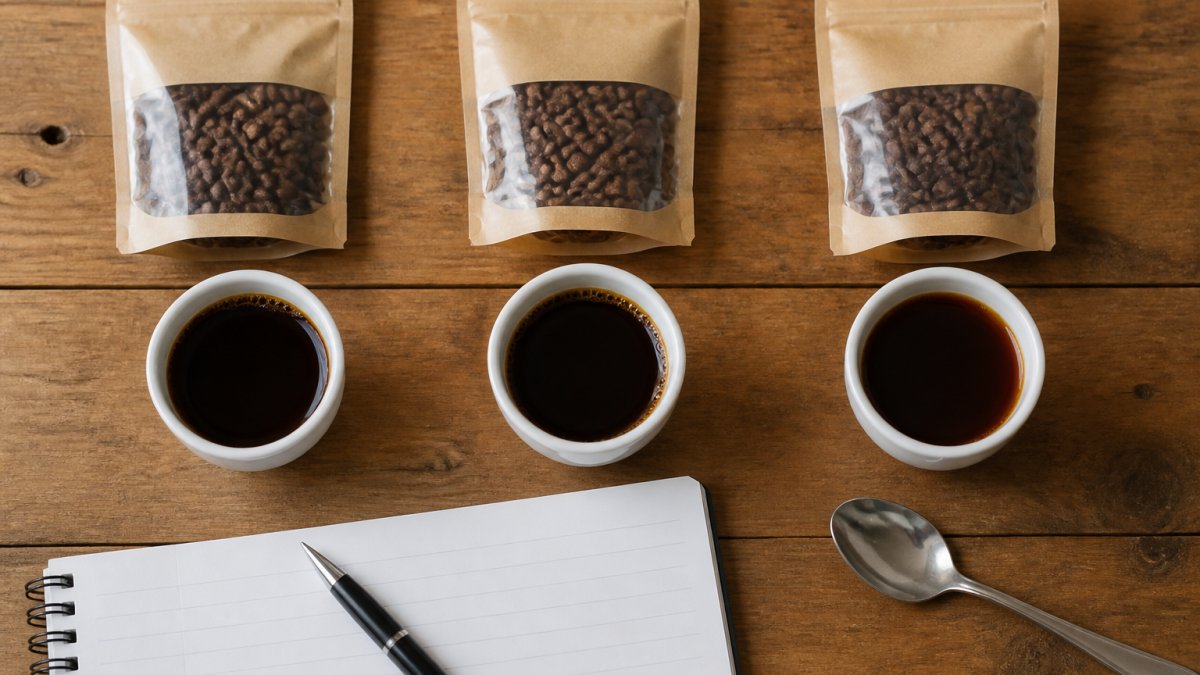
Score each coffee on five separate dimensions:
- Aroma: Smell before you sip. Floral, citrus, or chocolate?
- Acidity: The bright, tangy sensation. High or low?
- Sweetness: Does it taste sweet without sugar?
- Body: The weight on your tongue. Light like tea or heavy like cream?
- Aftertaste: What lingers, and for how long?
Setting Up a Side-by-Side Tasting at Home
Brew two coffees with identical method, grind, water temperature, and ratio. Change only the bean. Label the cups so you don't know which is which, then score both. Taste, wait a minute, and taste again as the cup cools. Flavors shift as coffee cools, and the differences often get clearer.
Harvest, Freshness, and Year-to-Year Variation
Freshness and harvest timing shape what you taste, and no two harvests are identical.
Harvest timing follows the equator, not the calendar. Most producing regions sit between the Tropics of Cancer and Capricorn, and picking typically happens once a year in a window of a few months.
After harvest, green coffee is stable for months but not years. Once roasted, the clock runs fast. A single origin roasted to order tastes completely different from the same bean sitting on a shelf for months.
Year-to-year variation is the part most guides skip. A farm's crop changes because rainfall, temperature, cherry disease, and picking labor all shift. A wet year can dilute sugars; a dry, sunny ripening season can concentrate them.
A practical buying habit: treat single origin like produce. Buy the current crop, check the roast date, and expect the flavor to shift next year. If you find a lot you love, buy enough to enjoy it through its window rather than assuming next year's will match. That is the trade-off you accept when you choose distinctiveness over the year-round consistency of a blend.
Frequently Asked Questions
What is the difference between single origin coffee and blended coffee?
Single origin coffee comes from one country, region, farm, or lot, so its flavor reflects that specific place and harvest. Blends combine beans from multiple origins, roasted to hit a consistent target flavor. A blend is built for repeatability: the roaster adjusts the formulation as crops change so the cup tastes the same year-round. Single origin coffee is built for distinctiveness, which is why two bags from the same country can taste noticeably different from each other.
Does roast level affect the flavor of single origin coffee?
Yes, and it can matter as much as the origin itself. A light roast preserves more acidity, floral notes, and fruit notes, so delicate washed coffees from Ethiopia or Tanzania show their character. Darker roasts push development further, building chocolate notes, brown sugar, and body while muting the brighter origin markers. That is why the same green coffee can taste like citrus at a medium-light roast and like molasses at a medium-dark roast. Roast level decides how much of the origin you actually get to taste.
Is single origin coffee stronger than a blend?
Not in caffeine terms. Strength depends mostly on dose, grind, water ratio, and brew time, not on whether the beans come from one place or several. What single origin coffee does offer is more complexity and traceability: you can name the farm, variety, altitude, and processing method behind the cup. A blend can taste bolder simply because it includes darker-roasted components. If you want a heavier body, look at roast level and brewing method rather than origin alone.
How can you taste the differences between single origin coffees?
Brew two origins side by side using the same method, dose, grind, and water so the only variable is the bean. Slurp a small amount, then rate aroma, acidity, sweetness, body, and aftertaste separately before comparing. Try Johnny D's Brew's Single Origin Favorites Sample Pack, which includes six 2oz packs such as Ethiopia Natural and Colombia, so you can run the same comparison across origins without committing to full bags.
Comparing single origins is the fastest way to understand why the same bean type tastes different from one place to the next, and it's hard to do that with one bag at a time. Johnny D's Brew roasts to order for maximum freshness and aroma, sources beans from trusted farms around the world, and ships free on coffee and tea. Start with the Single Origin Favorites Sample Pack and taste the difference for yourself. Find Your Perfect Roast.